Website Guide HERE

X
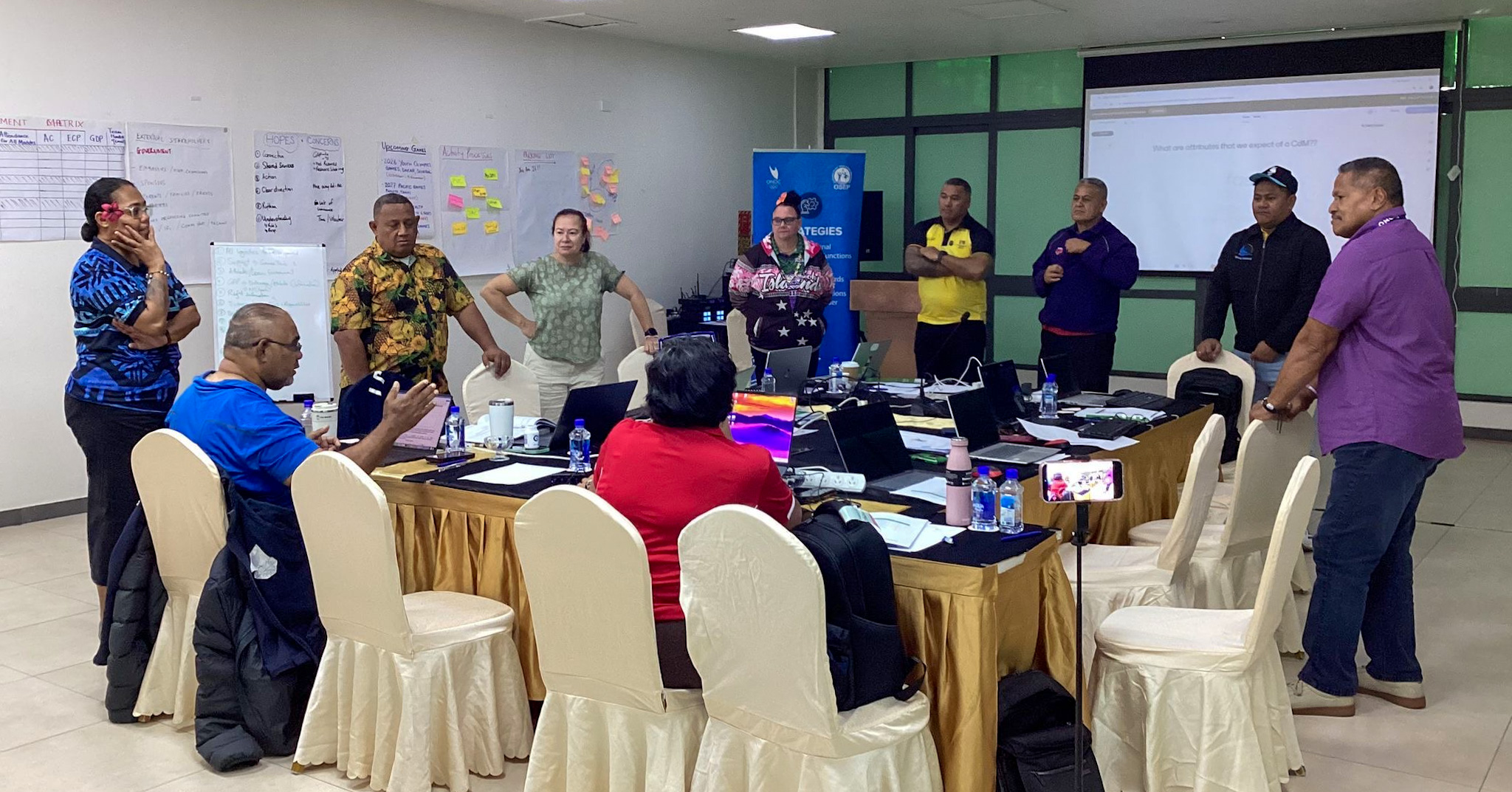
Chefs de Mission from seven Pacific National Olympic Committees completed the four-day Oceania Sport Education Programme (OSEP) Chef de Mission Course in Nadi on Thursday, leaving with clearer roles, practical planning tools and a stronger focus on supporting athletes.
Held at the Nalagi Hotel from 24 to 27 August, the South Pacific Edition brought together delegation leaders from the Cook Islands, Papua New Guinea, Samoa, Solomon Islands, Tonga, Tuvalu and Vanuatu. It followed the North Pacific Edition delivered in Palau earlier in August, completing the regional roll-out of the course.
Over four days, participants worked on three core outputs: a Games Delivery Plan, an Event Concept Plan and a Team Handbook. Together, the documents are designed to help NOCs clarify responsibilities, coordinate their Games operations and create an environment in which athletes can concentrate on performing.
ONOC's OSEP Lead and LA28 Games Shared Services Lead, Meli Cavu, returned in his closing remarks to the commitments he had asked participants to make at the start of the course.
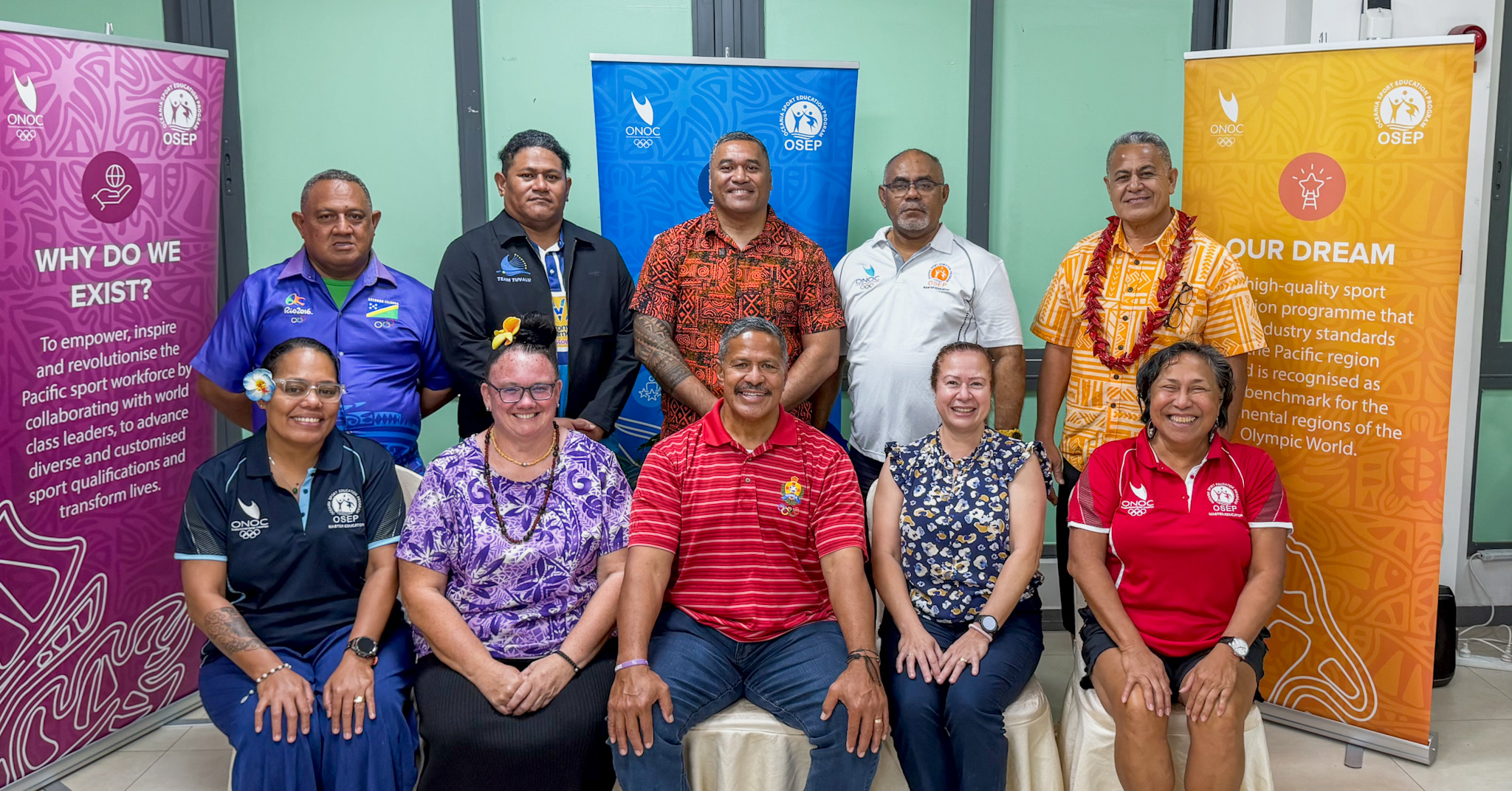
"When we began this workshop, I asked you to commit to three things: participate honestly, work practically and leave with ownership. My hope is that every CdM leaves not only with a deeper understanding of the breadth and complexity of the role, but also with a stronger sense of ownership of the responsibilities it entails," Cavu said.
OSEP Mentor Talemo Waqa said the participants' reflections revealed a growing appreciation of what effective delegation leadership requires.
"What stood out was the CdMs' candid acknowledgement, during their reflections, of the considerable work required to be effective, reliable and athlete-centred leaders. It was rewarding to witness those lightbulb moments," Waqa said.
That shift was reflected in the experiences shared by the CdMs.
Tonga's LA28 Chef de Mission, Takitoa Taumoepeau, said the course had brought structure and clarity to a role he had previously performed largely through experience and instinct.
"Although I have performed this role before, it was before OSEP came into play, so I can confidently say that I was largely playing it by ear. Previously, we did things according to how we felt or thought they should be done; now, there is a structured way of doing the role," Taumoepeau said.
For Papua New Guinea's LA28 Chef de Mission, Barbara Stubbings, the next step is to ensure planning begins with evidence and the voices of athletes.
"We need to speak directly with our athletes and ask: How can we help them? What do they need from us to succeed? What has worked, and what has not? Too often, we plan at a certain level without listening to our athletes. We need to change that, hear their voices and concerns, and develop individual plans to support them going forward," Stubbings said.
Samoa's LA28 Chef de Mission, Faafetai Tauiliili, said the course outputs had sharpened his NOC's approach to Games preparation.
"These are valuable outputs because they have refocused our preparations. They bring everything into focus and help align our work, ensuring that we account for everything required to prepare for the LA28 Olympic Games. We can also use the same tools and structure when preparing for other Games in the future," Tauiliili said.
Vanuatu's LA28 Chef de Mission, David Lolo, highlighted the value of the documents in bringing the wider delegation together.
"The Games Delivery Plan, Event Concept Plan and Team Handbook will bring us closer together. These documents will help me, as the team lead, draw everyone together and keep our preparations on track. They will also guide our management team and entourage so that we achieve everything we need to before departing for LA28," Lolo said.
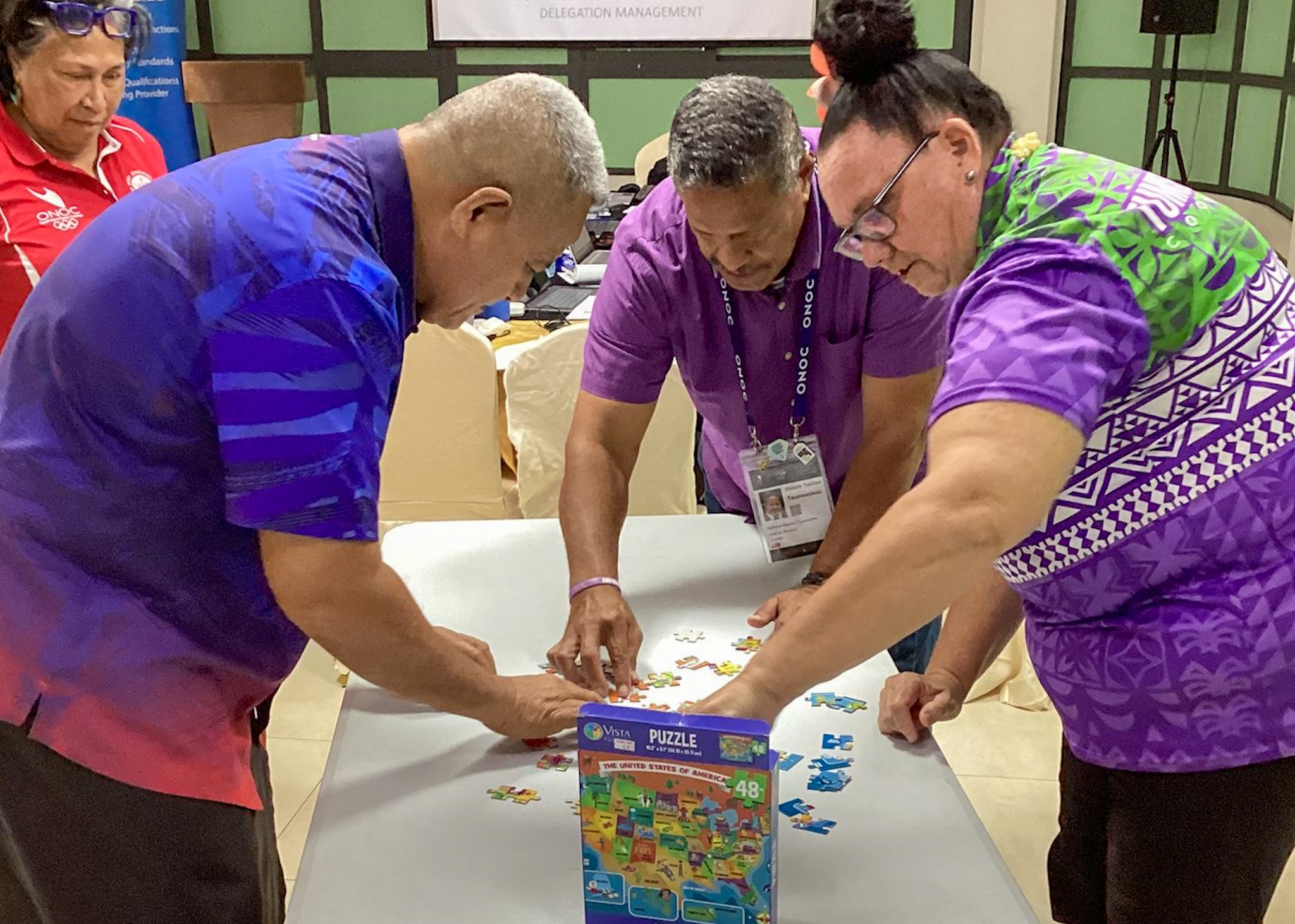
Cook Islands NOC's Chef de Mission for the Dakar 2026 Youth Olympic Games, Michelle Paiti, said detailed preparation should remove distractions for athletes.
"My priority will be to work through the Event Concept Plan in detail with the team back in the Cook Islands, ensuring that we cover everything required and access all the right information and documents. We want to prepare the delegation so effectively that our athletes do not have to worry about anything beyond preparing to perform on the field of play," Paiti said.
OSEP Mentor Nynette Sass said stronger recognition of the CdM role by NOCs would ultimately translate into better support for athletes.
"I hope NOCs will recognise and value the importance of the Chef de Mission role, and that, in time, CdMs will be appropriately remunerated for the significant responsibilities they carry. Ultimately, our athletes deserve the best possible preparation and support," Sass said.
Master Educator Jane Niubalavu said the exchange among participants had also strengthened her practice as a facilitator.
"As a facilitator, I was surprised by how much I enjoyed the experience. What stood out most was watching participants engage with one another and seeing conversations develop naturally. It challenged me to be more adaptable and trust the process, and I came away feeling more confident and inspired to facilitate future workshops," Niubalavu said.
The course forms part of ONOC's wider Games Support approach and supports the ONOC Strategic Plan 2025-2028 commitment to strengthen NOC capability while placing athletes at the heart of sustainable success.
The South Pacific edition of the Chef de Mission Course followed the North Pacific edition, which was delivered in Palau from 10 to 14 August 2026.
###
About ONOC
Established in 1981, the Oceania National Olympic Committees (ONOC) is one of five Continental Associations. It looks after the interests of 17 member nations in the Oceania Region, including Australia and New Zealand as well as seven associate members.
###
For more information, please contact;
Inoke Bainimarama, Executive Director
inoke@oceanianoc.org
###
Digital Channels
For up-to-the-minute information on ONOC and regular updates, please follow us on Facebook, Twitter, Instagram LinkedIn and YouTube.