Website Guide HERE

X
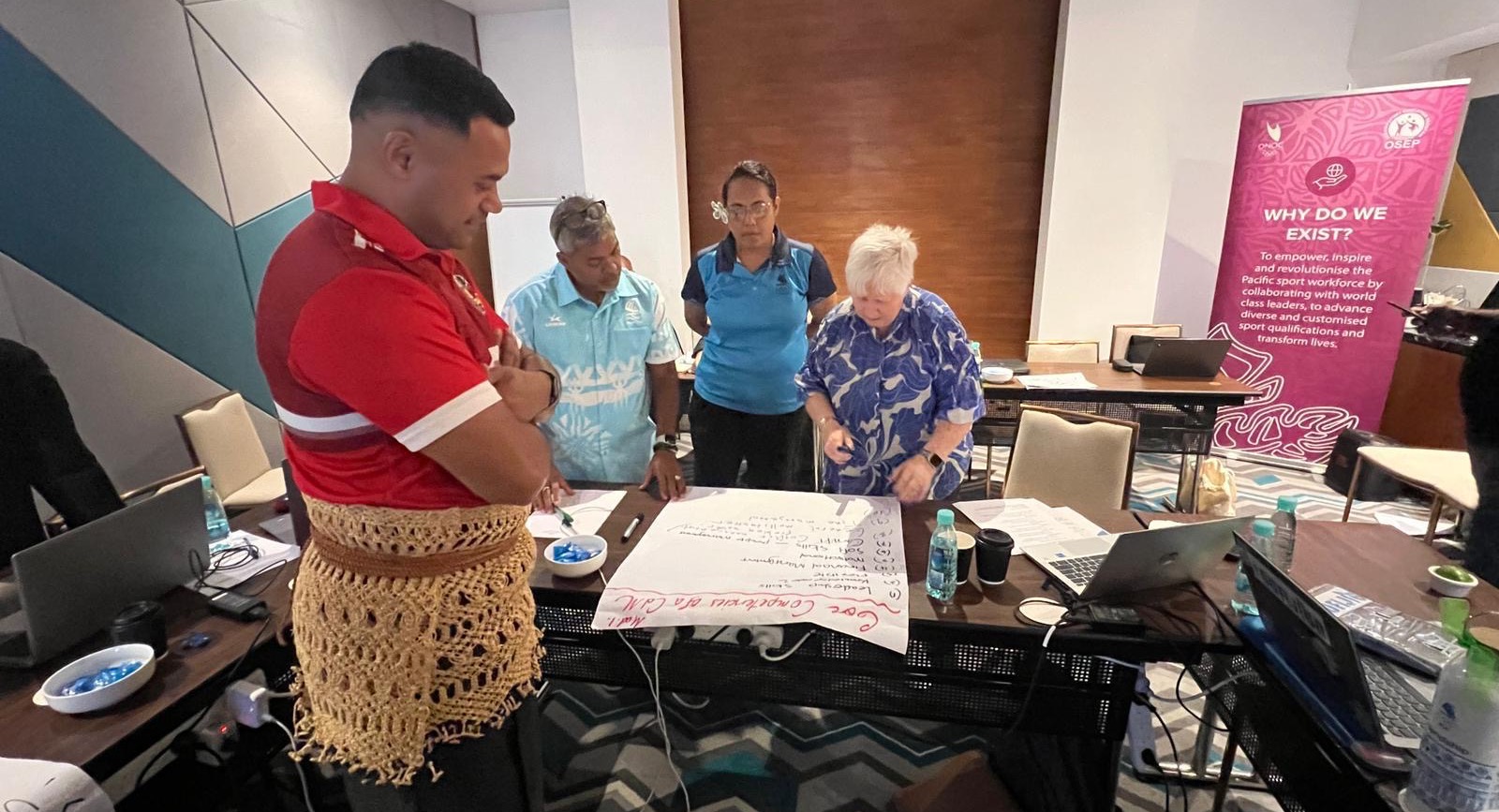
Inaugural training marks a strategic step toward Brisbane 2032 Home Games Advantage
NADI, FIJI (26–28 November 2025) – The Oceania National Olympic Committees (ONOC), through its flagship Oceania Sport Education Programme (OSEP), piloted its inaugural Chef de Mission (CdM) Training Programme in Nadi from 26–28 November, bringing together six emerging Games delegation leaders from across the Pacific to strengthen Games operations and athlete support systems on the road to Brisbane 2032.
The three-day pilot training opened with remarks from ONOC Education Commission Chair James Tobin, representing a significant investment in building sustainable leadership capability across Oceania’s 17 National Olympic Committees (NOCs). The programme was hosted at the Crowne Plaza, Nadi, and provided a dedicated space for participants to deepen their understanding of delegation leadership in a high-performance, values-driven environment.
For this pilot, six NOCs were invited, ensuring balanced sub-regional representation: Fiji and Papua New Guinea (Melanesia), Kiribati and Nauru (Micronesia), and Tonga and Tuvalu (Polynesia). This approach enabled focused discussion while testing the programme’s relevance across diverse Pacific contexts.
In his opening address, Chair Tobin emphasised the strategic importance of the training within ONOC’s broader vision. “This course is more than a workshop. It is part of ONOC’s focused effort to build a Home Games Advantage for Oceania,” he said.
The training was firmly anchored in the ONOC Strategic Plan 2025–2028 and President Baklai Temengil’s Focused HGO! - Home Games Oceania Programme, with clear alignment to three strategic priorities:
Chair Tobin highlighted that the programme is not an isolated initiative, but part of a longer-term pathway to prepare Oceania for LA 2028, Brisbane 2032, and future multi-sport events.
Chair Tobin outlined the multifaceted nature of the Chef de Mission role, describing it as sitting at the intersection of performance, wellbeing, culture, and operational systems. He emphasised that the CdM plays a central role in creating environments where athletes and coaches can perform at their best while remaining safe, supported, and respected.
He further noted that the CdM carries the responsibility of representing national identity, values, and pride, while ensuring planning, logistics, and communication are executed effectively. “When these elements are aligned, the CdM becomes a powerful connector — turning plans into performance and values into lived experience,” he said.
Reflecting on the intensity of the pilot, Meli Cavu, Head of OSEP, noted that the programme was deliberately designed to leave no critical area unaddressed.
“This is an intensive course, and that is intentional,” Cavu said. “It clearly demonstrates just how critical the Chef de Mission role is. OSEP is ready to train and equip Chefs de Mission selected by their NOCs so they can better lead, support, and serve their Games delegations.”
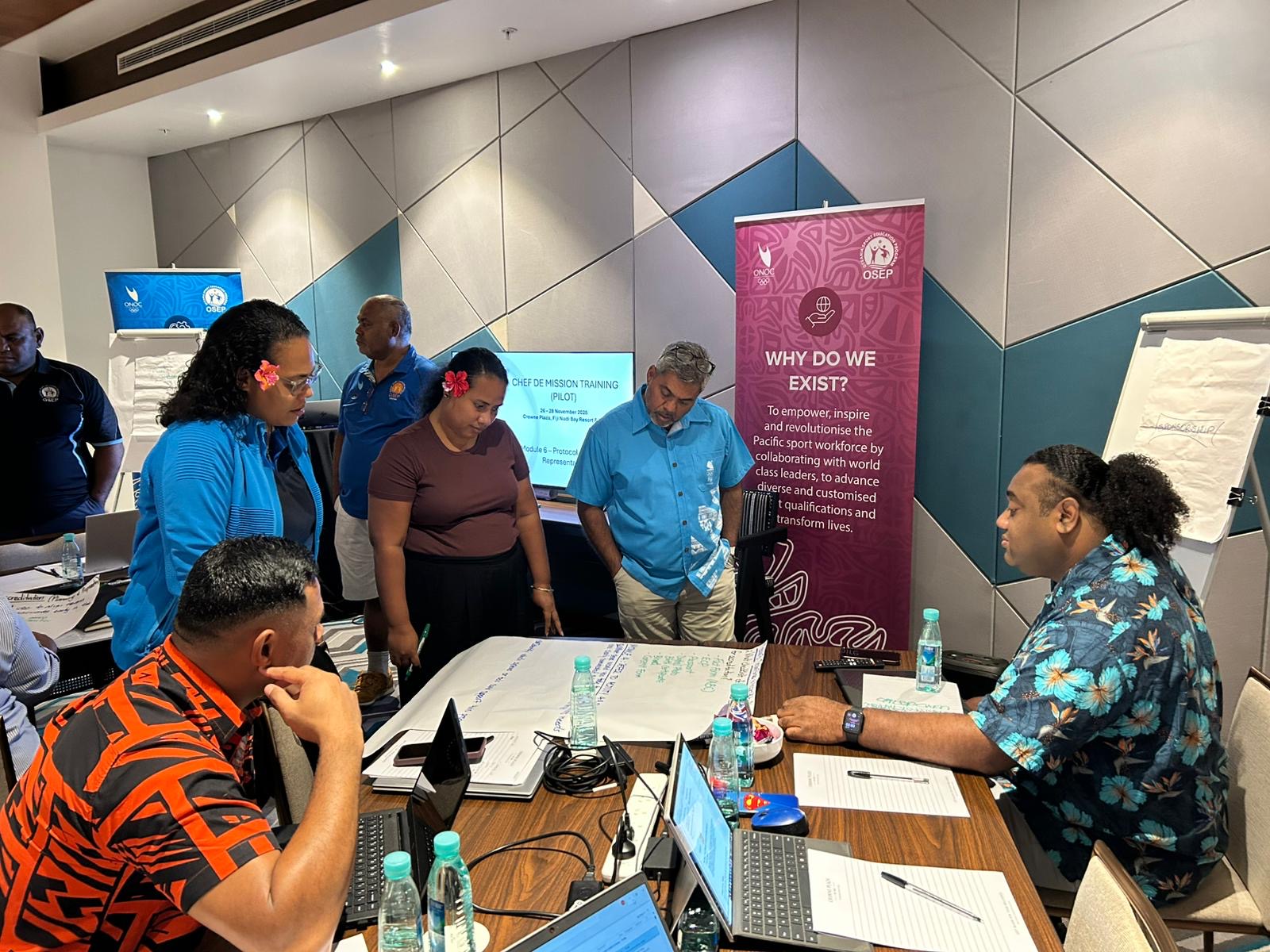
A defining feature of the pilot was its co-design philosophy. Participants were encouraged to actively shape the programme, with feedback informing the final curriculum ahead of regional rollout in 2026.
The curriculum draws on the Chef de Mission Dossier for previous Olympic Games and regional Games, the experiences of former Oceania Chefs de Mission, as well as the operational expertise of ONOC Secretariat staff involved in the ONOC Shared Services Programme at previous editions of the Olympic Games.
Over the three days, participants explored the full scope of the CdM role before, during, and after Games; addressed safeguarding, wellbeing, and culture as core responsibilities; worked through scenario-based exercises drawn from Pacific experiences; and shared challenges and good practices from their own NOC contexts.
Welcoming participants on behalf of the ONOC Secretariat, Executive Director Inoke Bainimarama highlighted the broader intent behind the programme and the evolution of OSEP.
“OSEP is not only about who we train,” Bainimarama said. “It is about future-proofing Oceania through the people who influence our athletes every day. When we strengthen Chefs de Mission, team managers, coaches, and administrators, we strengthen entire systems around athletes.”
He emphasised that the CdM Pilot Course sits at the national level of OSEP’s Team Management pathway, complementing existing development-level programmes and contributing directly to ONOC’s Home Games Advantage ambitions.
The successful piloting of the Chef de Mission training programme is expected to make a significant contribution to Oceania’s readiness for upcoming Games cycles, supporting consistent standards of delegation leadership across the region.
Participant feedback gathered during the pilot will inform final curriculum development ahead of wider regional rollout, ensuring the programme reflects Pacific realities and supports Oceania’s historic journey toward Brisbane 2032.
###
About ONOC
Established in 1981, the Oceania National Olympic Committees (ONOC) is one of five Continental Associations. It looks after the interests of 17 member nations in the Oceania Region, including Australia and New Zealand as well as seven associate members.
###
For more information, please contact;
Sitiveni Tawakevou
Chief Communications Officer (Acting)
sitiveni@oceanianoc.org
###
Digital Channels
For up-to-the-minute information on ONOC and regular updates, please follow us on Facebook, Twitter, Instagram LinkedIn and YouTube.