Website Guide HERE

X
The Oceania National Olympic Committees (ONOC) is one of five Continental Associations in the Olympic Movement and looks after the interests of 17 member nations from the Pacific Region including Australia and New Zealand.
The ONOC Secretariat is headquartered in Suva, Fiji. The Office of the Secretary General, Mr Ricardo Blas, continues to operate from Guam, ensuring effective regional coordination and support across Oceania. ONOC remains committed to strengthening NOC capacity, cultivating regional and global partnerships, contributing to sporting excellence, and delivering high-quality services aligned with the ONOC Strategic Plan.
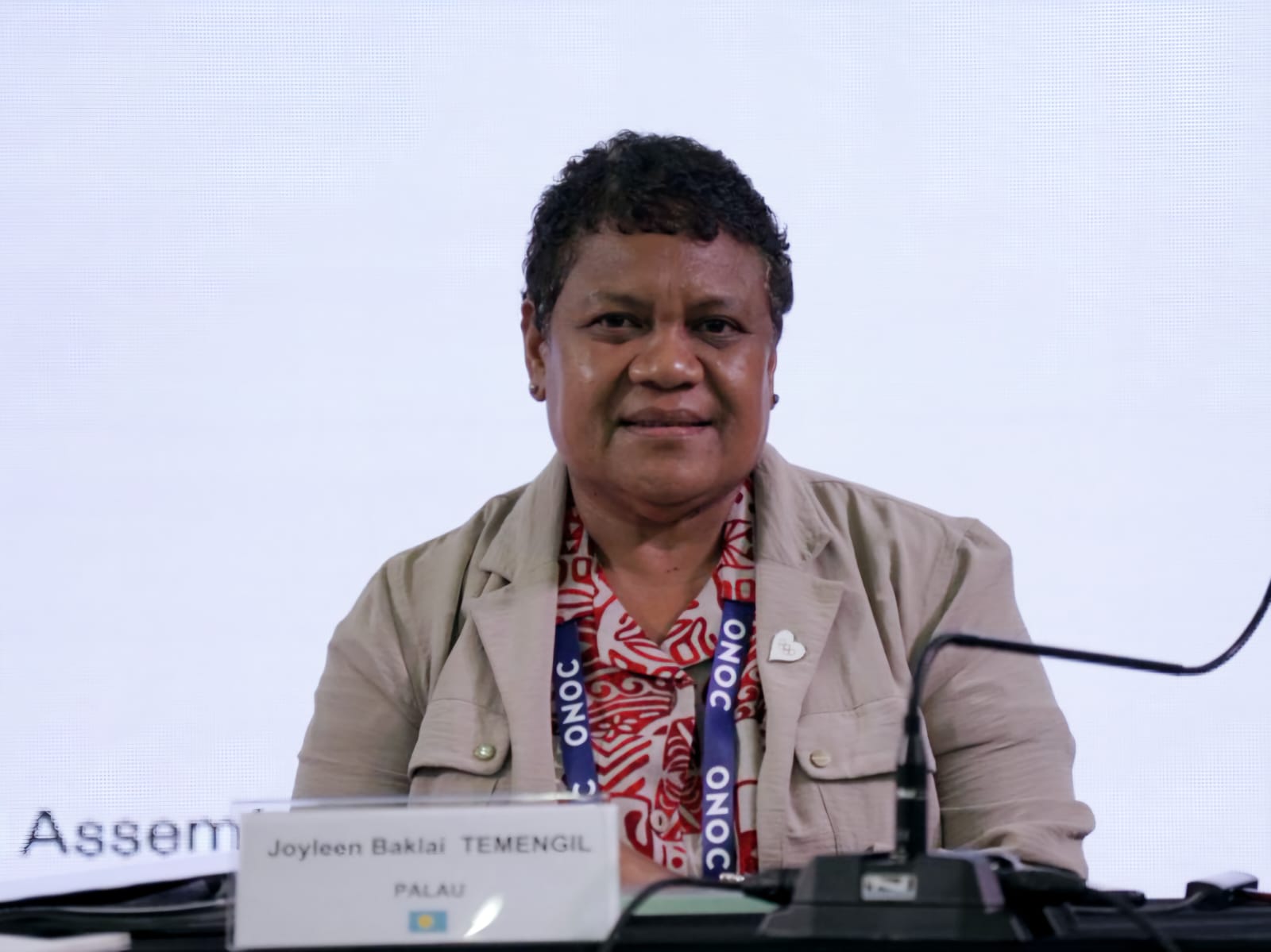
The Office of the President of ONOC is currently led by President Baklai, who is based at the Palau National Olympic Committee (PNOC) Office in Palau.
Working closely with the ONOC Secretariat in Suva and the Secretary General’s Office in Guam, the President provides strategic leadership, governance oversight, and regional representation for the Oceania Olympic Movement.
The Secretariat continues to provide administrative and operational support to the Office of the President to ensure the effective delivery of ONOC’s strategic priorities across the region.
ONOC President: Baklai Temengil-Chilton

The Office of the Secretary General, Mr Ricardo Blas is based in Guam and the office is managed by Mr Michael Kohn. True to the nature of operations in the Pacific Islands, ONOC operates remotely via technological support with periodic visits aligned to regional and or international meetings. Mr Blas is also Member of the IOC Olympic Solidarity Commission, ANOC Executive Member, Secretary-General of ONOC, President of Guam NOC and President Oceania Handball Federation.
ONOC Secretary-General: Ricardo Blas
Executive Assistant: Michael Kohn
Office Assistant: Nathan Meyer

Olympic Solidarity (OS) is the Oceania National Olympic Committee’s (ONOC’s) largest programme and its most critical.
It is a funding mechanism that is received by ONOC by virtue of its position as a Continental Association. The OS fund constitutes IOC revenue from broadcasting rights in Olympic Games. The fund is collated and distributed to five continental associations every quadrennial (based on media rights proceeds of the Olympic Games held). ONOC qualifies as a Continental Association and now manages its own OS programme, a priviledge earned through considerable lobby and demonstration of commitment.
The overarching IOC OS also distributes funds directly to NOCs and athletes through a wide range of programmes.
Chief Olympic Solidarity Officer: Michael Kohn
Olympic Solidarity Officer: David Dugucanavanua
The Executive Office in the Secretariat, under the helm of the Executive Director Inoke Bainimarama, acts as the central axis of leadership and organizational administration within the Oceania National Olympic Committees (ONOC) Secretariat in Suva.
Committed to excellence and integrity, our Executive Office serves as the central hub, orchestrating and harmonizing the diverse initiatives the Executive Board, Administration, President Robin Mitchell, Secretary General Ricardo Blas, ONOC Departments, ONOC Commissions, ONOC Partners and ONOC Stakeholders propelling the continental Olympic movement forward.
The Secretariat reports to the ONOC Secretary General, ensuring the seamless execution of their respective responsibilities and mandates under the framework of the ONOC Strategic Plan.
Executive Director: Mr Inoke Bainimarama
Team
Elizabeth Betty
Tessa-Maree Harman: Administrator & HR Officer
Nyla Alfred: Receptionist

The ONOC Secretariat has a small Administration Team that provides support to both ONOC and to the 17 NOCs in the areas of administration, human resources, logistics and travel.
Chief Administrative Services Officer: Meli Cavu
Administrative & HR Officer: Tessa-Marie Heritage
Team
Receptionist: Nyla Alfred
Office Assistant: Kesaia Lewasucudua

The ONOC Secretariat has a small Finance Team that provides core accounting and finance support to ONOC and the 17 NOCs through management of Olympic Solidarity Funds and capacity building according to the IOC Seven Principles of Good Governance.
Finance Consultant: Maibole Digitaki
Finance Officer: Elizabeth Betty

The Oceania Sports Education Programme (OSEP) is an innovative Pacific led sport education programme that has transformed and complemented capacity and capability development within the sports sector in the Pacific region in the last 12 years. OSEP was established in 2007 through a partnership between the Australian Sports Commission (ASC), the Organisation of Sports Federations of Oceania (OSFO) and the Oceania National Olympic Committees (ONOC).
Its coordination team operates out of the Secretariat in Suva, Fiji, working with OSEP Education Officers in zones ensuring decentralisation and access for beneficiaries. The officers work with accredited training providers and partners in 15 countries around the region. OSEP has established pathways from foundational to masters’ levels, frameworks, policies and procedures. These have supported the development and growth of NOCs, National Sports Federations (NSFs/NFs), Pacific-based sports coaches, volunteers, athletes, team managers, technical officials, administrators, teachers and relevant others.
Chief Sport Education Programme Officer (Acting): Varanisese Karisitiana
Team
OSEP Training Officer: Ratu Josaia Koro
Programme Data Officer: Marica Togayali
Programme Administrative Officer: Ana Finau Ah Yuk

The ONOC Secretariat has a Technology Department that provides guidance through Information Services and technology support via management of overall IT infrastructure. It also provides services through the setting up of digital events.
Chief Information Technology Officer: Mr Sitiveni Tawakevou
Team
Information Services Assistant: Matelita Buadromo
Information Technology Officer: George Tabakaucoro

The Department has a mission ‘to deliver a Communications and Visibility Framework and Work Plan that will effectively inform and promote ONOC and the services it provides.’ To ensure the facilitation of consistent, reliable and credible information on the Olympic Movement in and through the Oceania Continent, the ONOC Communication Strategy is categorised into 4 Work Blocks which it structures and delivers services and products through internally, to external stakeholders and via support to NOCs.
The Work Blocks constitute structuring and organising Institutional Communications Framework that will support ONOC’s corporate functions; structuring and organising Programme Communications Framework; supporting ONOC’s Information Services Team in the development of a robust Digital platform that strengthens ONOC’s presence internally (ONOC Extranet) and externally (ONOC website and Social media Channels); and to grow, upskill and build capacity through Training and Personal development opportunities.
Chief Communications Officer (Acting): Sitiveni Tawakevou
Team:
Michael Irava - Web Development Consultant