Website Guide HERE

X
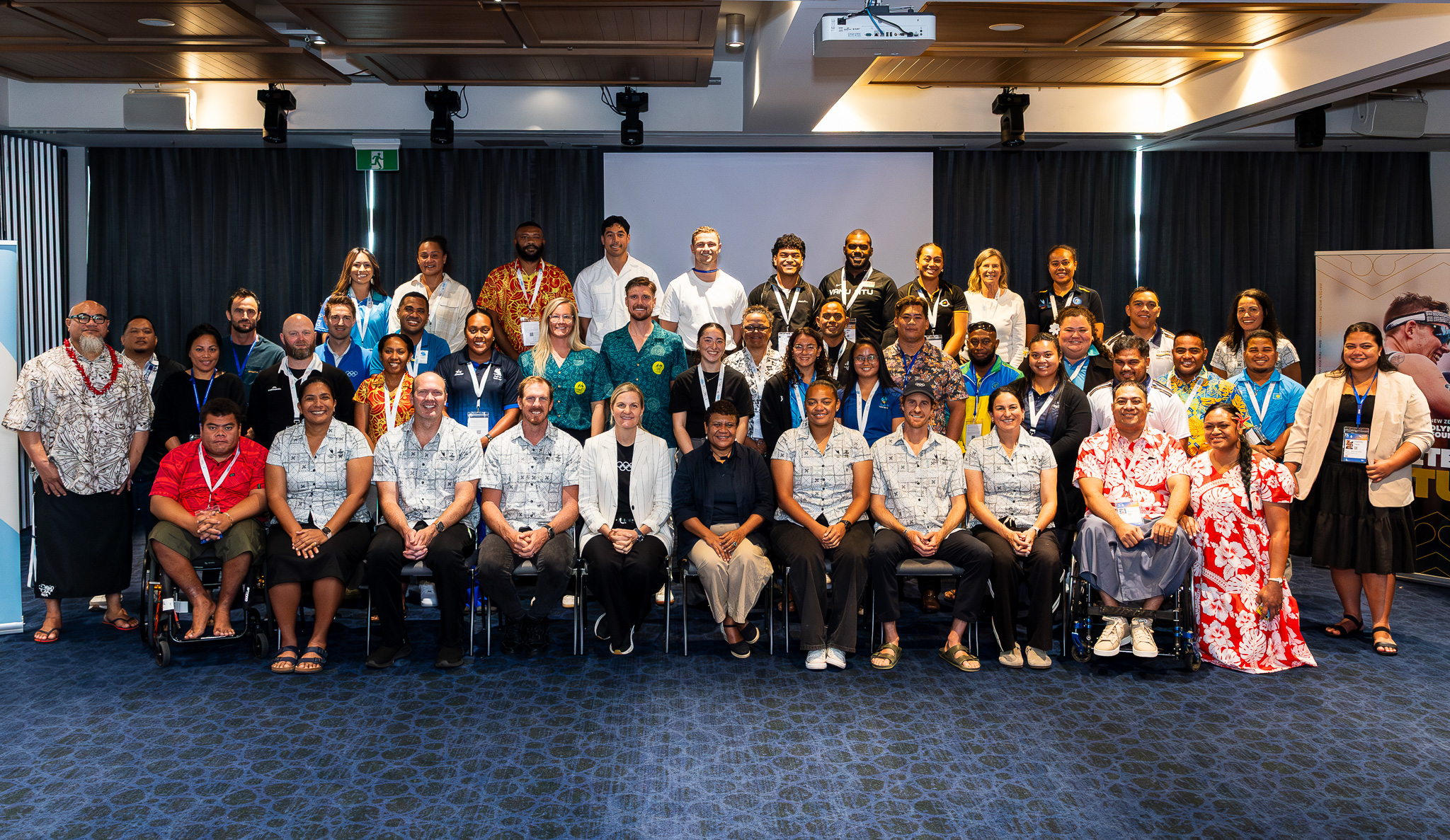
At the 2026 Oceania Athletes Forum in Auckland, IOC President Kirsty Coventry and ONOC President Baklai Temengil-Chilton took unscripted questions from nearly 40 Pacific athlete representatives on governance, climate, retirement and the IOC's Fit for Future review.
Auckland, New Zealand — 22 May 2026 · ONOC Media
Following the formal opening of the 2026 Oceania Athletes Forum in Auckland, the room quickly shifted from ceremony into conversation. IOC President Kirsty Coventry and ONOC President Baklai Temengil-Chilton took their seats alongside emcee Sarah Walker for a session that was equal parts fireside chat and open floor, giving nearly 40 athlete representatives from across Oceania the rare opportunity to put questions directly to the two most senior leaders in Olympic sport in the region.
A short warm-up set the mood. Asked to describe Oceania in three words, President Coventry offered “passionate, integrity, and respectful,” while President Baklai answered with “power, intention, and more power.” Then the questions came. Both presidents were asked the hardest question they could put to themselves in their current roles; President Coventry spoke about the challenge of being the leader with full sight of an organisation while those around her may only hold part of the picture, and the responsibility of building trust across a structure where everyone needs to move together.
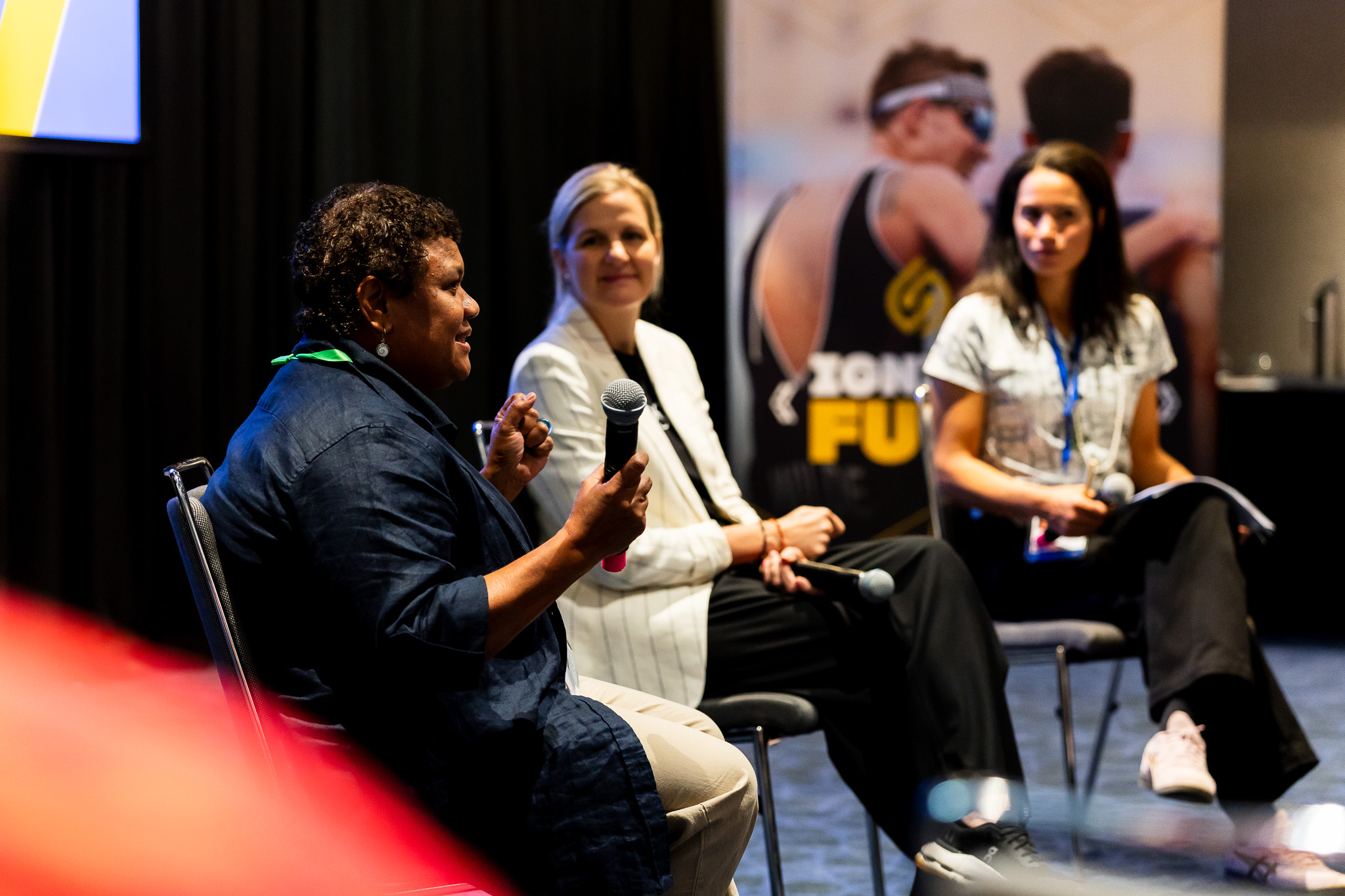
The conversation turned personal when Angel San Nicholas from the Northern Mariana Islands asked both presidents about stepping away from competition. President Coventry described how it was never really about the racing but about the fear of losing the community sport had built around her; a knee dislocation and pneumonia before London 2012 left the ending feeling wrong, so she returned for Rio 2016, finished on her own terms, and walked away with the closure she needed. President Baklai took a quieter path, having been an administrator while still competing until she redirected her energy — and she still paddles.
A Cook Islands representative raised the challenge of staying connected to diaspora athletes based in New Zealand and Australia. President Coventry's answer was simple: technology, used with genuine intent — real check-ins rather than programme updates. Climate change drew a significant exchange, with the Pacific's disproportionate exposure to rising seas and extreme weather raised directly. President Coventry was clear that the IOC's role sits in advocacy, in holding host cities to higher environmental standards, and in working with organisations whose core focus is climate action, while being honest that direct implementation is not where the movement's power sits.
“In the Pacific context, this is really right in our shores and in our doorfront.” — Baklai Temengil-Chilton, President, ONOC
President Baklai encouraged athletes to build environmental networks now, framing climate engagement as part of their development as leaders. Asked for an update on the IOC's Fit for Future review, President Coventry outlined nine working groups, broad stakeholder surveys, and an honest reckoning with what is working and what is not, including the decision to pause the Youth Olympic Games.
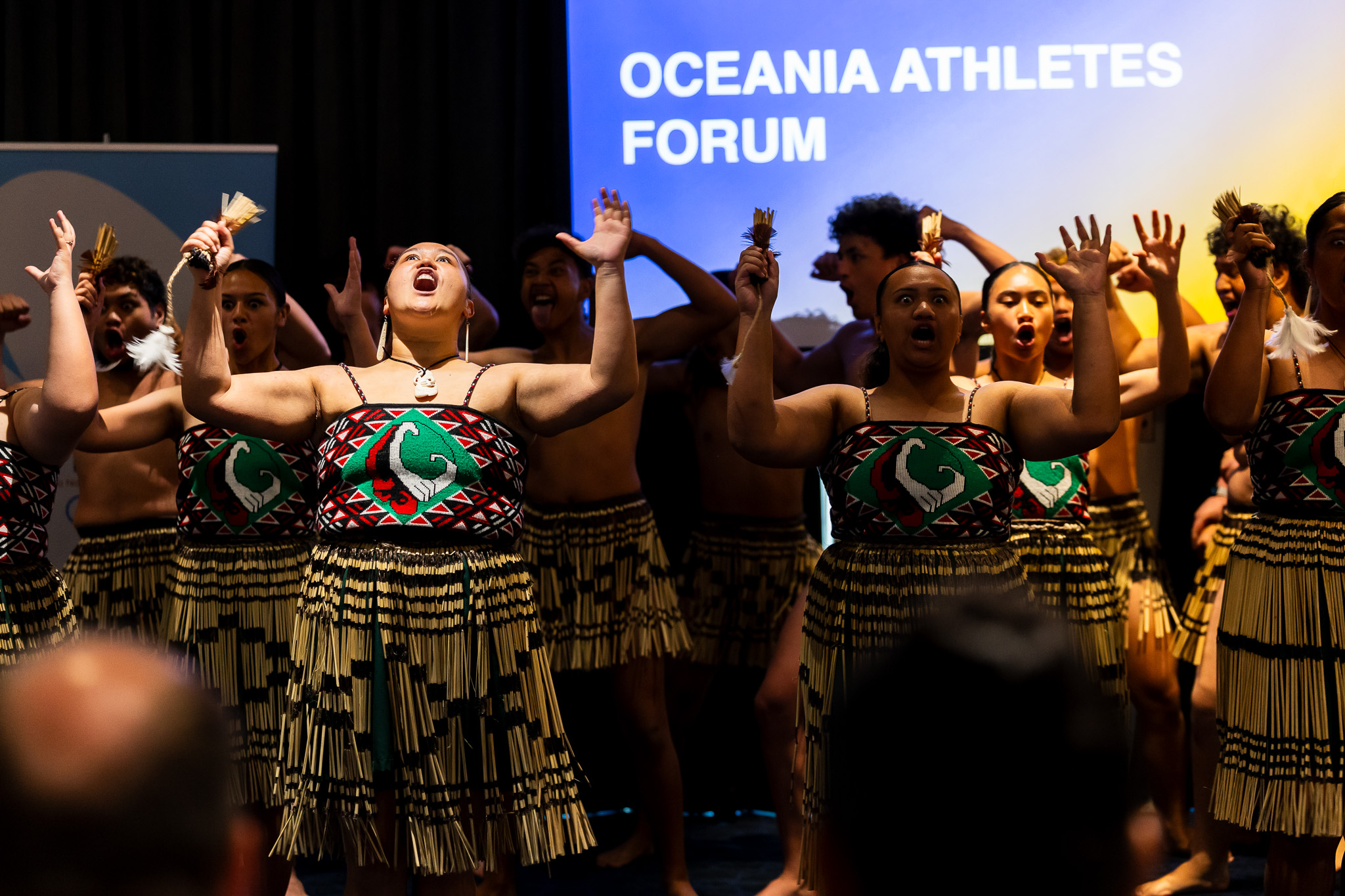
“We need to be brave enough to say that's not working, we're going to stop it, we're going to evaluate it. That is a little bit of a new culture for us.” — Kirsty Coventry, President, IOC
She also spoke plainly about accountability, signalling an intention to attach conditions to how Olympic Solidarity funding is used, with a clear expectation that a defined proportion reaches athlete development directly. A final question acknowledged what was already visible in the room — two female presidents, a rarity at any level of sport governance — and asked both leaders who had championed them. President Baklai spoke of the women leaders across Oceania who pushed her to step forward, and of her husband and two daughters as her grounding; President Coventry spoke of a grandmother who modelled independence, a college coach who showed her how to hold everything together under pressure, and the doubters during her IOC campaign who added fuel to her determination.
“It is important that you have people around you that keep you grounded, that know you for who you actually are.” — Kirsty Coventry, President, IOC
Walker closed the session with a reminder that the athlete consultation calls connected to Fit for Future, inconvenient as the time zones can be, are precisely what shapes conversations like the one the room had just shared: show up, ask the questions, and trust that it matters.
###
About ONOC
Established in 1981, the Oceania National Olympic Committees (ONOC) is one of five Continental Associations. It looks after the interests of 17 member nations in the Oceania Region, including Australia and New Zealand as well as seven associate members.
###
For more information, please contact;
Inoke Bainimarama, Executive Director
inoke@oceanianoc.org
###
Digital Channels
For up-to-the-minute information on ONOC and regular updates, please follow us on Facebook, Twitter, Instagram LinkedIn and YouTube.