Website Guide HERE

X
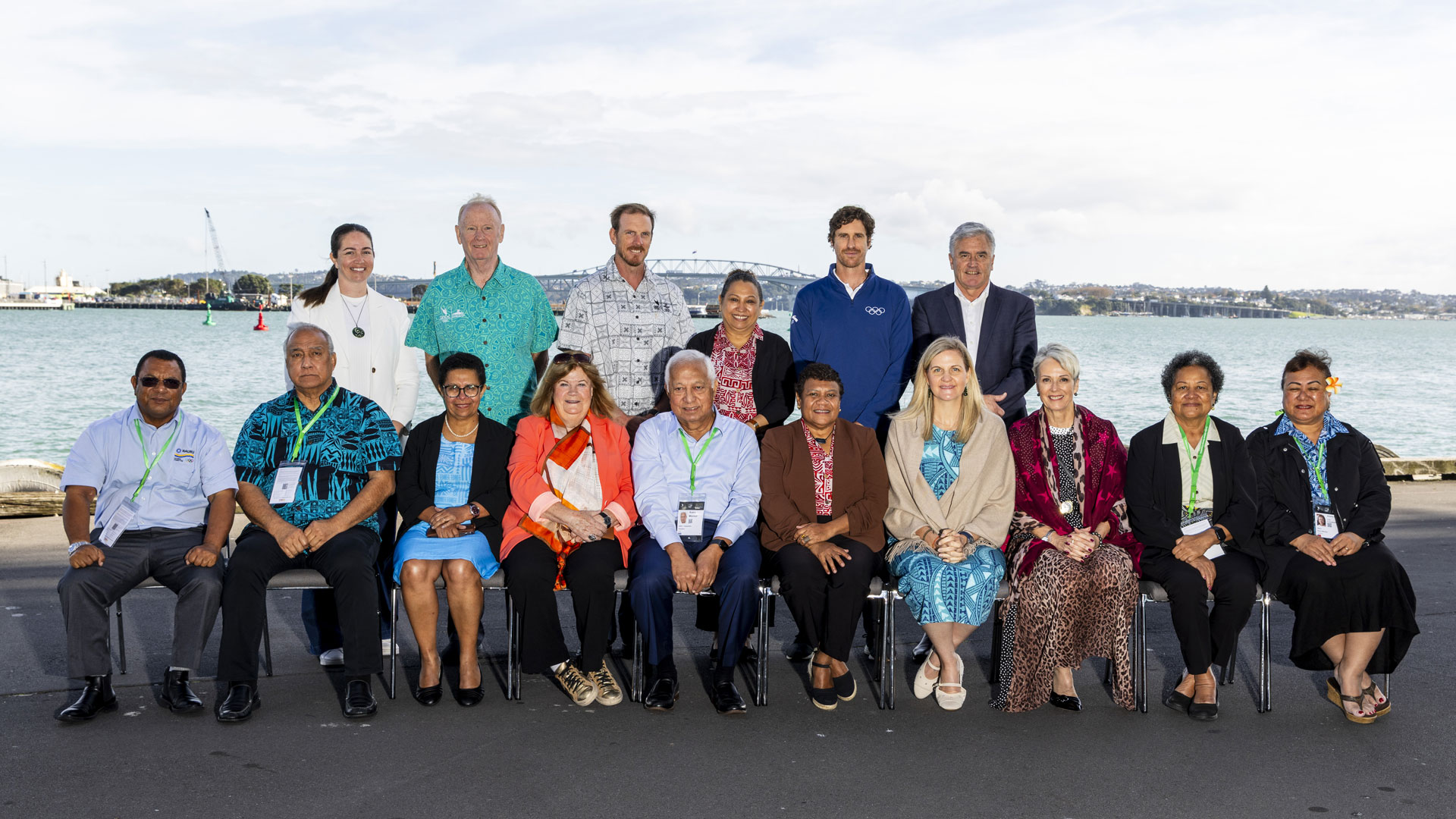
The Oceania National Olympic Committees (ONOC) brought its 46th Annual General Assembly to a close at the Hilton Auckland today, ending a week that drew the region’s partners together around a single ambition — to keep the athlete at the centre.
The Oceania National Olympic Committees (ONOC) brought its 46th Annual General Assembly (AGA) to a close at the Hilton Auckland today, ending a week that drew the region’s partners together around a single ambition — to keep the athlete at the centre of everything Oceania does. The Assembly was the centrepiece of AGA Week (17 to 23 May) and the first General Assembly chaired by ONOC President Baklai Temengil-Chilton since she took office.
“Together means solidarity. Together means inclusion. Together means no nation, no island, and no athlete stands alone.” Baklai Temengil-Chilton, President, ONOC
Opening proceedings, President Temengil-Chilton welcomed International Olympic Committee (IOC) President Kirsty Coventry to her first General Assembly in the region since assuming office. The day began with a traditional Māori pōwhiri and remarks from New Zealand Olympic Committee President Liz Dawson, and saw the IOC present its Gender Equality, Diversity and Inclusion (JEDI) Champions Award for Oceania to New Zealand’s Robin Kober in recognition of more than three decades advancing inclusion across the Pacific.
Reflecting on a week that convened ORADO, the Commonwealth and the Paralympic movement alongside ONOC, the President said partnership and inclusion had been the unifying theme.
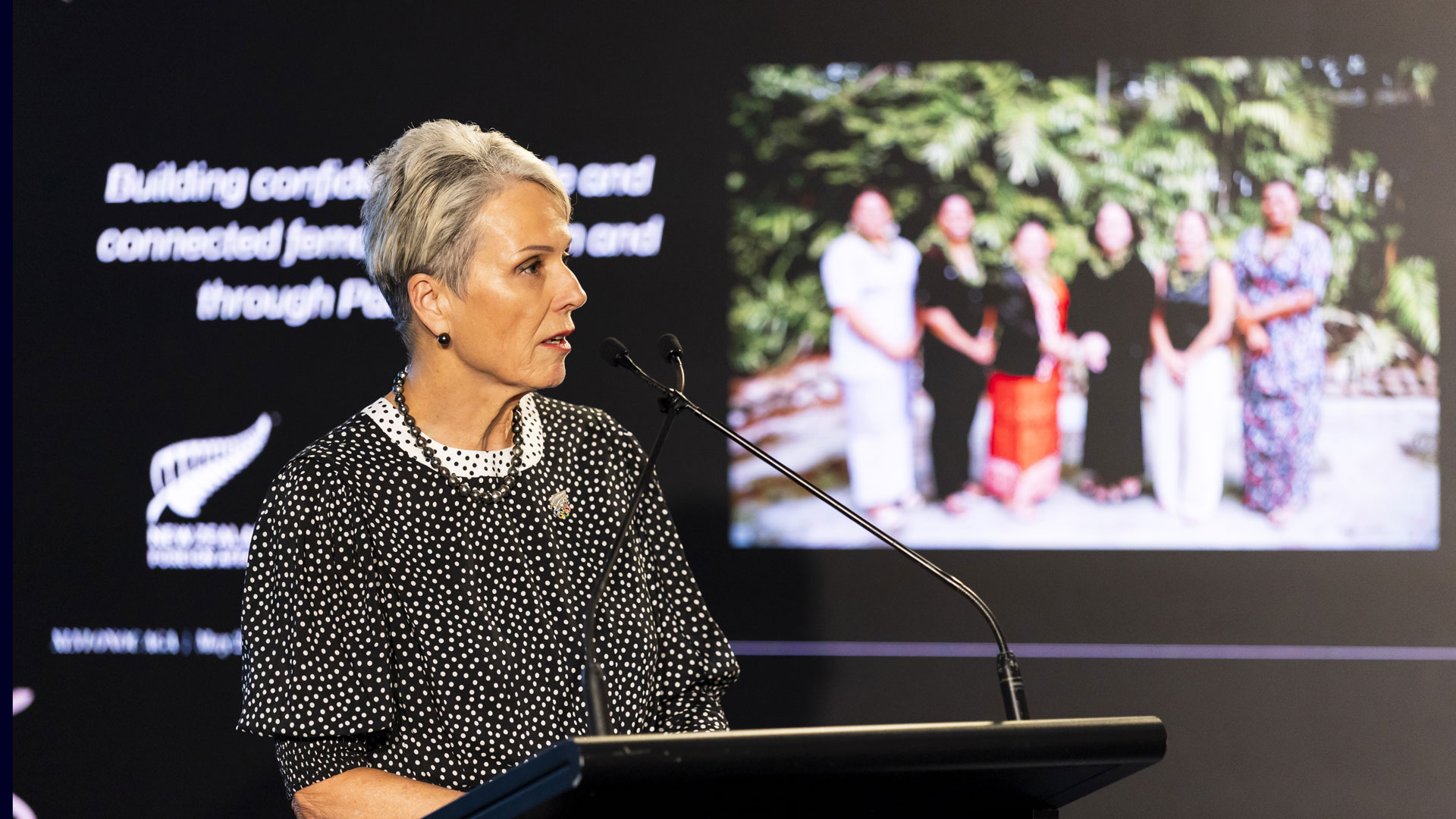
“Everyone has their strategy, but it is the same objective and the same goals. The amazing thing about this is inclusion — it is the athlete at the centre of all that we do. We at ONOC cannot do it alone; we rely on our partners.” Baklai Temengil-Chilton, President, ONOC
The Assembly’s most significant business was ONOC’s own institutional reform, a review of its charter and Articles of Association, including resolutions brought by the Vanuatu NOC, following two years of consultation with leaders across the region.
“This is my first General Assembly, so I am excited to open it today in Auckland and lead that conversation. But the big day for us is really looking at our own institution, doing reforms, reviewing our charter. Reform and change is not easy, but we have to continue to evolve.” Baklai Temengil-Chilton, President, ONOC
Delegates from the 17 National Olympic Committees of Oceania worked through a full agenda spanning ONOC governance and financial reports, the ONOC Commission reports, an address on the journey to Brisbane 2032 from Organising Committee President Andrew Liveris, and updates on Los Angeles 2028 and the 2027 Pacific Games in Tahiti. The Assembly closed with the presentation of the 2026 ONOC Merit Awards.
The Merit Awards honoured two pioneering women of Pacific and Oceania sport. Fiji’s Cathy Wong, FASANOC President, longtime ONOC Medical and Games Commission leader and the first Pasifika woman appointed to the World Rugby Council, was recognised for more than three decades advancing athlete welfare, women’s participation and sports medicine across the region. Australia’s Helen Brownlee, a trailblazer in Olympic governance and Chair of the ONOC Equity Commission, was honoured for a lifetime championing gender equity, safeguarding and women’s leadership pathways throughout Oceania.
Describing Brisbane 2032 as a “home Games advantage” for the entire region, the President pointed to the ONOC Games Commission and its partners — Paralympics Oceania, Oceania Sport and Commonwealth Oceania — as central to preparing athletes, coaches, administrators and leaders for the road ahead.
In closing, President Temengil-Chilton thanked ONOC’s partners and reaffirmed that the standards, systems and partnerships strengthened this week will shape Oceania’s journey to Los Angeles 2028, the 2027 Pacific Games in Tahiti, and a home Games at Brisbane 2032.
###
About ONOC
Established in 1981, the Oceania National Olympic Committees (ONOC) is one of five Continental Associations. It looks after the interests of 17 member nations in the Oceania Region, including Australia and New Zealand as well as seven associate members.
###
For more information, please contact;
Inoke Bainimarama, Executive Director
inoke@oceanianoc.org
###
Digital Channels
For up-to-the-minute information on ONOC and regular updates, please follow us on Facebook, Twitter, Instagram LinkedIn and YouTube.