Website Guide HERE

X
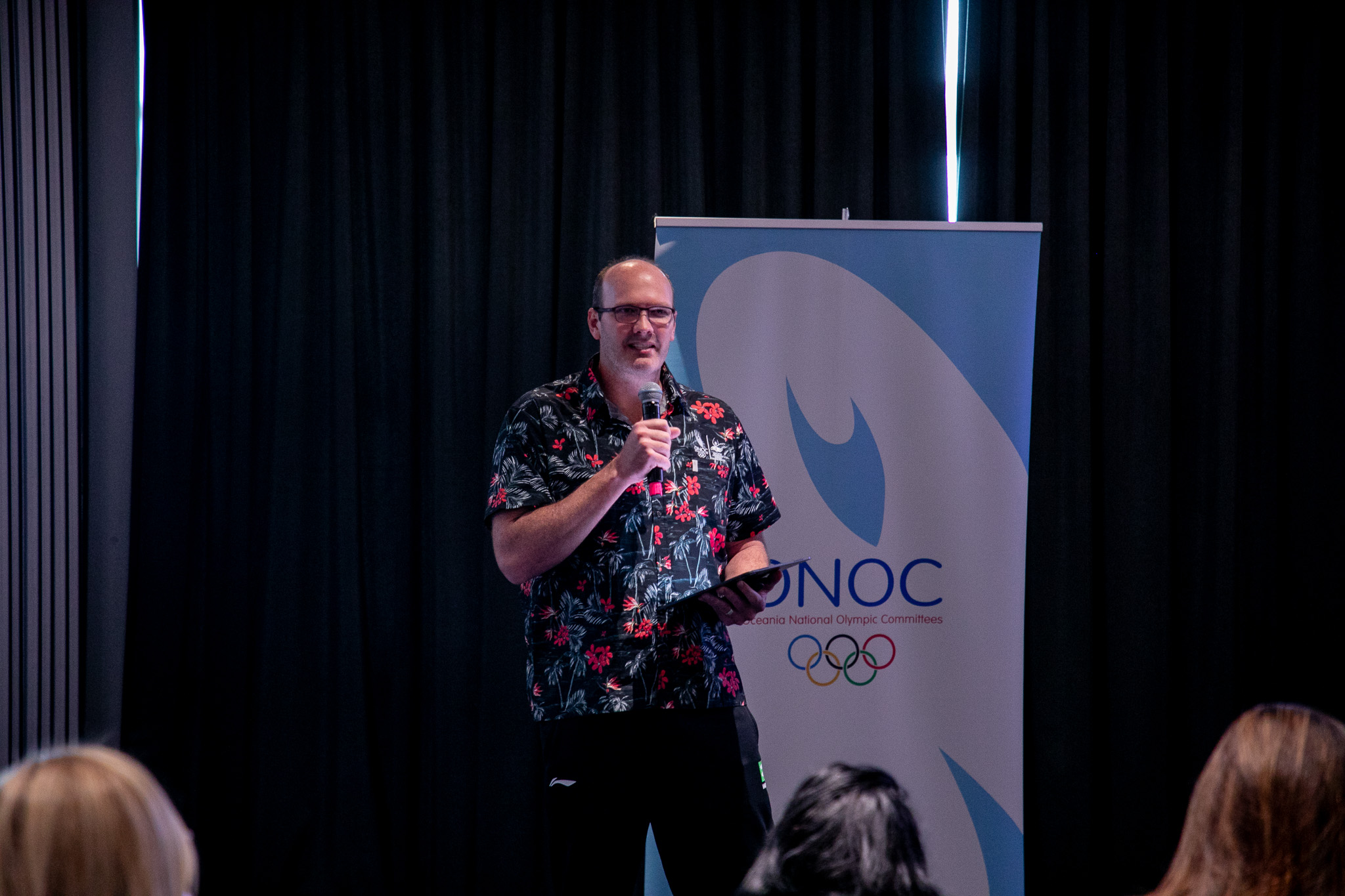
On the final day of the 2026 Oceania Athletes' Forum, Pacific Games Council Athlete Representative Ryan Pini briefed delegates on the Council's mandate and the road to Tahiti 2027 — including, for the first time, direct LA2028 Olympic qualification through the Pacific Games.
Auckland, New Zealand — 23 May 2026 · ONOC Media
The closing day of the 2026 Oceania Athletes' Forum placed the Pacific Games Council firmly in the spotlight, giving athlete representatives from across the region a detailed look at the body that governs their biggest stage and the Games calendar building toward Tahiti 2027 and beyond.
On Saturday 23 May, Pacific Games Council (PGC) Athlete Representative Ryan Pini addressed delegates at the Hilton Auckland, delivering a comprehensive overview of the Council's mandate, its committee structure, and the work already underway to make the 2027 Pacific Games in Tahiti a landmark event for Pacific sport. The session formed a centrepiece of Day Three of the Forum, held under the theme “Inspiration to Action” alongside the ONOC 46th Annual General Assembly Week.
Established in 1962, with the inaugural Pacific Games held in Fiji in 1963, the Pacific Games Council is the governing body responsible for the delivery of both the Pacific Games and the Pacific Mini Games. With 24 member nations, including associate members Australia and New Zealand, the Council's mandate spans game delivery, governance and rule-making, anti-doping, safeguarding and athlete welfare, sport development, and partner coordination. It works in close partnership with ONOC, the Oceania Regional Anti-Doping Organisation (ORADO) and Oceania Sport to deliver world-class multi-sport events across the region.
“We don't do this alone. We have partnerships with ONOC, ORADO, Oceania Sport, the international federations and the IOC. There is a big network behind everything the Council does, and all of it is in service of the athlete.” — Ryan Pini, Athlete Representative, Pacific Games Council
Pini holds a seat on the Sports Committee as the PGC's Athlete Representative, ensuring athlete perspectives directly inform decisions on sport selection, game size, qualification standards and athlete welfare policy. It is a role he described as central to the Council's direction, particularly as the Games continue to grow in scale and ambition.
All eyes now turn to Tahiti, where the 2027 Pacific Games will be held from 24 July to 7 August across 24 sports and 24 nations. The PGC Executive Board visited Tahiti recently, and Pini confirmed that preparations are well ahead of schedule across competition venues, athlete services and the Games Village. In a significant development for Pacific athletes, the Tahiti Games will for the first time offer direct LA2028 Olympic qualification in archery, tennis, triathlon and squash, with indirect ranking points available in athletics, judo, taekwondo and weightlifting. Discussions remain ongoing for boxing, sailing, swimming and wrestling.
“Win a gold medal in Tahiti and you are going to the LA Olympics. That is pretty amazing, and it is something we have worked very hard to make happen for our athletes.” — Ryan Pini, Athlete Representative, Pacific Games Council
Beyond Tahiti, the Games calendar through to Brisbane 2032 is full. The Pacific Mini Games will be held in Cook Islands in 2029, followed by the Pacific Games in Tonga in 2031, setting up what promises to be a golden era for Pacific sport in the lead-up to the Brisbane Olympic Games.
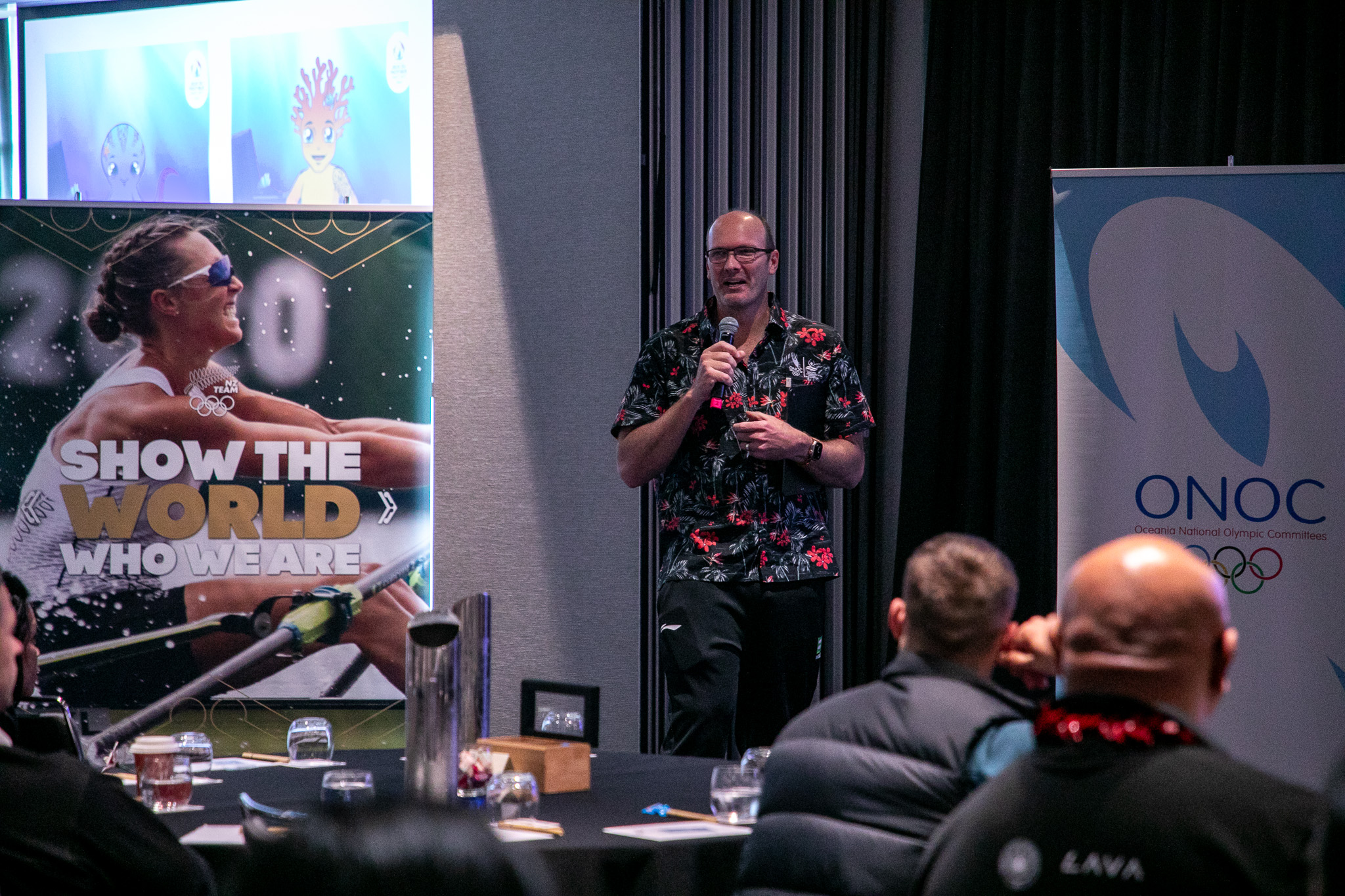
The Council operates through a series of specialist committees. The Sports Committee oversees the selection and regulation of sports across the Games programme, working directly with national and international federations to ensure competitions meet global standards. The Audit and Finance Committee ensures financial transparency and sustainability across all PGC activities. The Technical and Human Resource Committee works to build local officiating capacity within host nations, reducing the logistical burden on member nations and leaving a lasting legacy of trained technical officials in each Games host country. Cutting across all of these structures is a commitment to safeguarding and athlete welfare, with the PGC now mandating safeguarding officers within delegations and implementing independent wellbeing programmes at every Games.
The Oceania Athletes' Forum concluded this evening with a farewell dinner, marking the end of a landmark week for athlete leadership and governance across the Pacific.
###
About ONOC
Established in 1981, the Oceania National Olympic Committees (ONOC) is one of five Continental Associations. It looks after the interests of 17 member nations in the Oceania Region, including Australia and New Zealand as well as seven associate members.
###
For more information, please contact;
Inoke Bainimarama, Executive Director
inoke@oceanianoc.org
###
Digital Channels
For up-to-the-minute information on ONOC and regular updates, please follow us on Facebook, Twitter, Instagram LinkedIn and YouTube.