Website Guide HERE

X
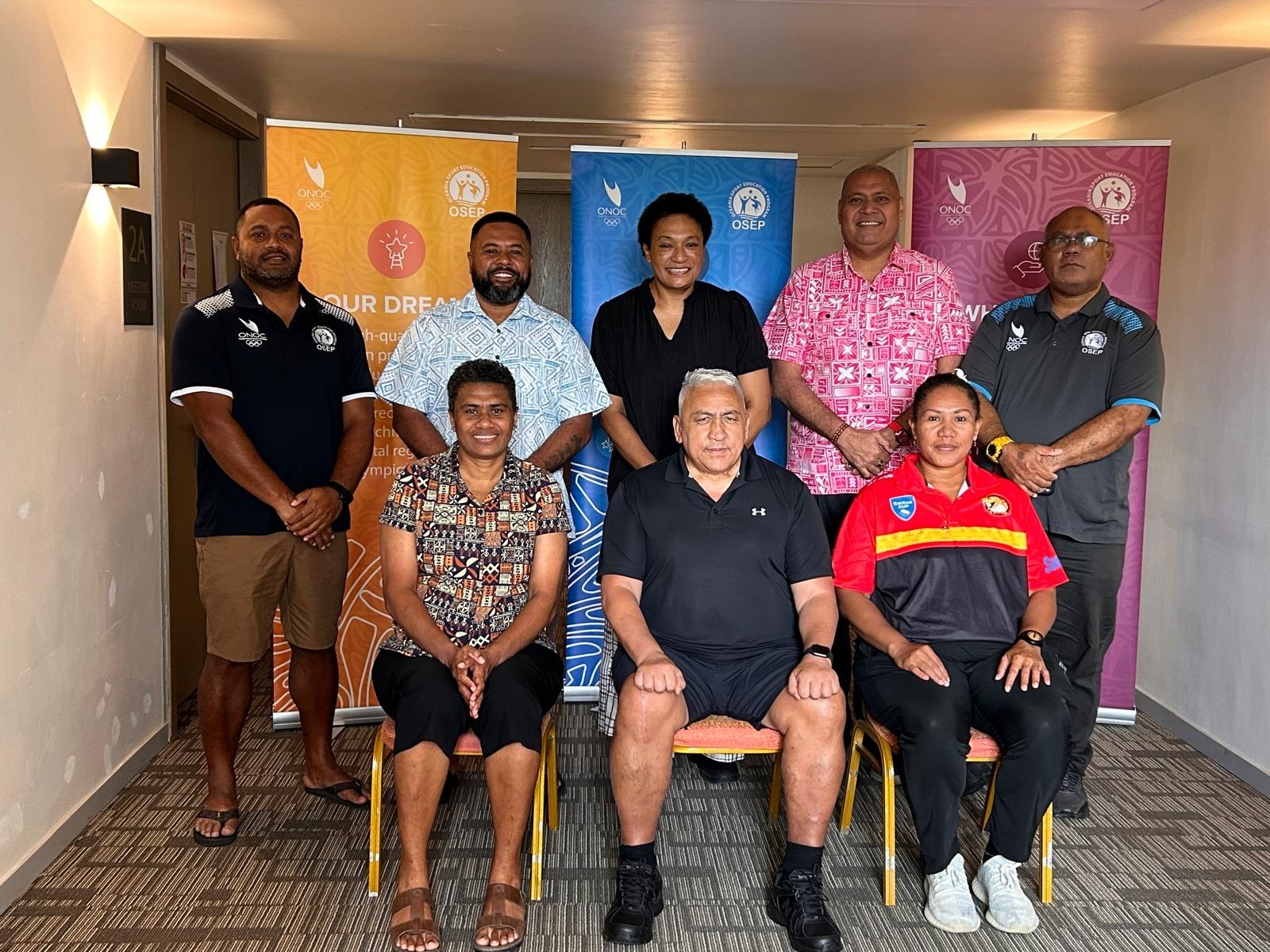
A five-day OSEP Strength and Conditioning Curriculum Validation Workshop has concluded in Nadi, strengthening a three-level coaching pathway that connects physical preparation with athlete safety, safeguarding and inclusion.
16 October 2026 | Nadi, Fiji | A five-day OSEP Strength and Conditioning Curriculum Validation Workshop has concluded in Nadi, strengthening a three-level coaching pathway that connects physical preparation with athlete safety, safeguarding and inclusion.
Held from 12–16 October, the workshop brought curriculum developers and validators together to review content, clarify progression and strengthen its relevance to Pacific coaching environments.
The Community and Development courses already form part of OSEP’s current suite and were reviewed and updated during the workshop. The National-level course is new, extending the pathway into elite Strength and Conditioning coaching.
Across the three levels, the review addressed safeguarding, gender equality, disability and social inclusion (GEDSI), athlete welfare and technical coaching competence.
OSEP Quality Officer Varanisese Karisitiana said the curricula had undergone rigorous scrutiny during the five-day workshop to ensure they met the required standards of quality, consistency and relevance and were competency-based.
Technical Lead Dr Trevor Clark highlighted the accessibility of Community-level education, with knowledge participants could begin applying immediately.
“What that means is it’s more accessible, it’s more inclusive and that anybody can come along and learn about strength and conditioning,” Dr Clark said.
He emphasised introductory activities that do not depend on specialist equipment and the value of locally delivered education through people who understand Pacific cultures and communication needs.
OSEP Regional Master Educator and Community curriculum developer Makelesi Bulikiobo said the introductory course was intended for people with little or no coaching background, including parents interested in understanding their children’s physical preparation.
Bulikiobo said the process challenged her to set aside assumptions based on her coaching experience and view the curriculum from the perspective of someone with no background in Strength and Conditioning.
She looked forward to piloting and implementation following the remaining refinements.
Validator Marica Togayali, an athlete representative with Fiji Volleyball, welcomed the emphasis on safe and inclusive participation, reflecting her focus on athlete wellbeing.
She said simplifying the Community-level curriculum would make it more accessible to aspiring coaches and encourage them to progress through OSEP’s coaching pathway.
National curriculum developer Saiasi Bose described the new course as an important milestone, creating further opportunities for coaches who may have limited access to international coaching education.
He said it would bridge the gap between Development and National-level preparation while recognising the facilities, equipment and resources available across the Pacific.
The intention is to prepare coaches to work to appropriate national-level expectations through education that can be delivered within their own region.
Fellow National curriculum developer Sharon Arua, a rehabilitation therapist from Papua New Guinea, emphasised collaboration between S&C coaches, physiotherapists and rehabilitation professionals.
She highlighted the importance of clear roles in supporting injured athletes: clinical assessment and diagnosis inform rehabilitation, while coordinated physical preparation supports an appropriate return to sport.
Her contribution reinforced that advanced S&C coaching requires professional boundaries and collaboration, with athlete health guiding decisions throughout recovery.
Inclusion & Adaptive S&C Validator Joave Nainoca, Disability Coordinator at the Fiji National Sports Commission, said the revised curricula could better equip coaches to support athletes with disabilities from community participation to high performance.
“I think the biggest impact that this curriculum will bring is breaking down social barriers,” Nainoca said.
He identified accessible facilities, suitable training spaces and changing attitudes as practical priorities. Better-prepared coaches could enable athletes with and without disabilities to train alongside one another and create opportunities for participation and progression.
Nainoca encouraged interested coaches to work with their National Olympic Committees and National Paralympic Committees.
The review distinguished physical training safety from safeguarding responsibilities, including protection against harassment, abuse, coercion and humiliation.
It also addressed professional boundaries, athlete voice, appropriate reporting and referral, and equitable opportunities regardless of gender, disability or social circumstances.
At National level, these responsibilities include coordination between the S&C coach, head coach and relevant support practitioners in demanding performance environments.
OSEP Chief Sport Education Programme Officer Meli Vunivuwai Cavu emphasised that the athlete’s experience must remain central to coaching education.
“Does the coach listen? Are professional boundaries clear? Can an athlete raise a concern without fear?” he asked in his opening address.
He also called for meaningful consideration of women and girls, athletes with disabilities and athletes with different needs, with protective and inclusive practices reflected in assessment.
OSEP Mentor Talemo Waqa contributed as Technical & RME/Delivery Validator, examining delivery across Pacific settings and emphasising the importance of keeping curriculum content current.
Strength and Conditioning is one of OSEP’s six training streams, alongside Administration, Technical Coaching, Games Team Management, Trainer and Safeguarding.
Cavu said OSEP would finalise the three curricula and complete the supporting training materials by the end of 2026, ready for piloting in the first quarter of 2027.
###
About ONOC
Established in 1981, the Oceania National Olympic Committees (ONOC) is one of five Continental Associations. It looks after the interests of 17 member nations in the Oceania Region, including Australia and New Zealand as well as seven associate members.
###
For more information, please contact;
Inoke Bainimarama, Executive Director
inoke@oceanianoc.org
###
Digital Channels
For up-to-the-minute information on ONOC and regular updates, please follow us on Facebook, Twitter, Instagram LinkedIn and YouTube.


