Website Guide HERE

X
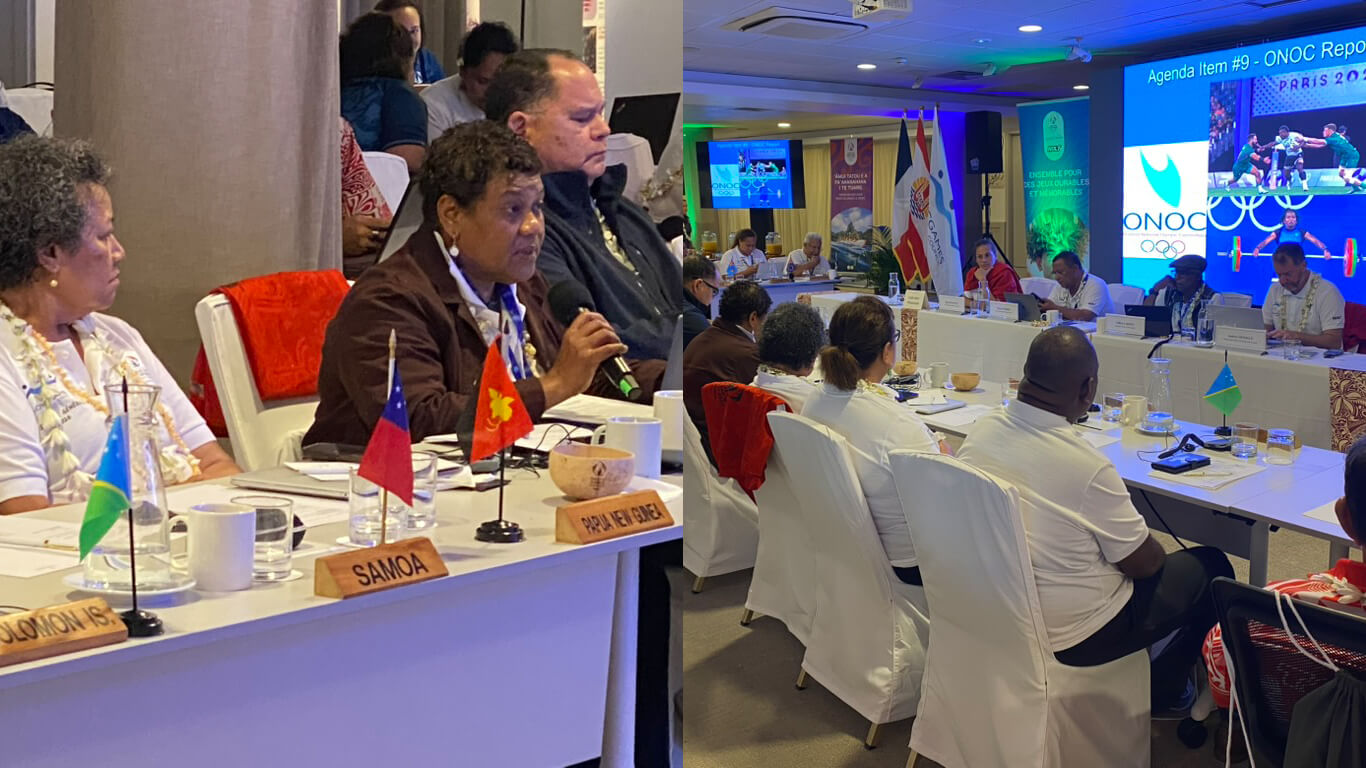
Oceania National Olympic Committees (ONOC) President Baklai Temengil has called for stronger regional alignment around athlete development, good governance and partnership, while inviting Pacific sporting leaders to begin exploring the potential for an Oceania Youth Olympic Games.
Papeete,Tahiti
Delivering her report to the Pacific Games Council (PGC) General Assembly in Papeete, Tahiti, President Temengil outlined ONOC’s ongoing programme of reform and renewal and its strategic focus on building a connected sporting pathway towards Los Angeles 2028 and the Brisbane 2032 Olympic and Paralympic Games.
President Temengil said the past year had been a period of “reflection, reform and renewal” for ONOC, guided by the ONOC Strategic Plan 2025–2028 and the organisation’s Fit for Purpose Reset Programme.
She highlighted progress in strengthening governance, financial stewardship, operational systems and organisational culture, with the objective of ensuring ONOC remains relevant, accountable and better equipped to serve its 17 National Olympic Committees, Associate Members, athletes and the wider sporting community across Oceania.
Central to this work has been the establishment of the ONOC Games Commission, chaired by Cathy Wong, which is developing a coordinated pathway towards Brisbane 2032.
The Commission brings together expertise from across the regional sporting system, including representation from the Pacific Games Council, Oceania Sport and Paralympic Oceania, and has begun engagement with the Brisbane 2032 Organising Committee around ONOC’s Home Games Oceania Programme.
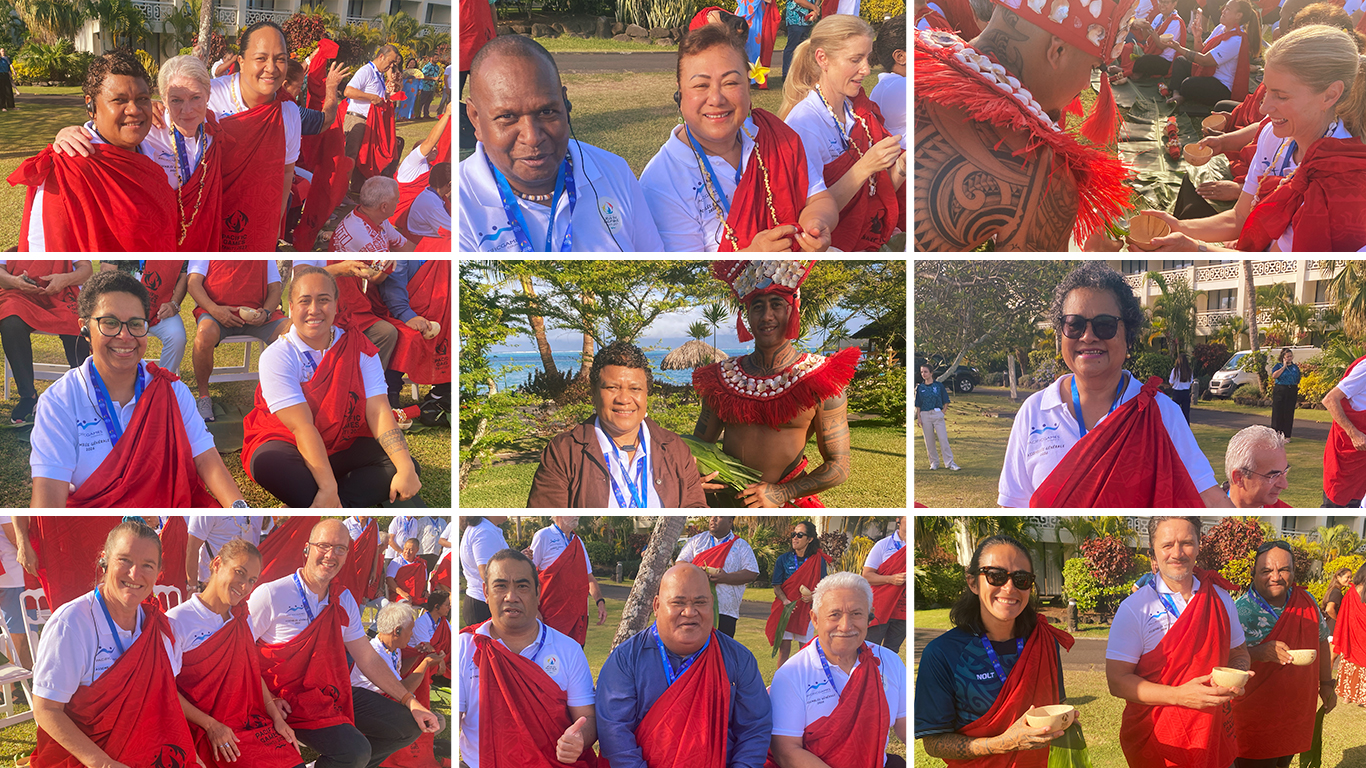
President Temengil said ONOC’s approach is centred on making better use of the Oceania sporting calendar to align planning, investment and resources around athlete development, high performance, training opportunities, safeguarding, inclusion and sustainable sporting pathways.
As Oceania prepares for a significant sequence of Games - including the Dakar Youth Olympic Games, Tahiti 2027 Pacific Games, Los Angeles 2028 Olympic Games and ultimately Brisbane 2032 - she said the region has an opportunity to view these events as part of one connected athlete pathway.
“These Games are not separate events. They represent one direction with many opportunities,” President Temengil said.
“They allow us to align our planning, maximise resources and create sustainable pathways for athletes, coaches, technical officials, sports administrators, volunteers and the entire sporting entourage that supports success.”
President Temengil presented three strategic messages to Pacific sporting leaders.
First, she said athletes must remain at the heart of every investment, programme and decision made by sporting organisations across the region.
Second, Oceania’s sporting organisations must lead by example through good governance, with transparency, accountability, integrity and sound financial stewardship essential to maintaining trust.
Third, she called for a model of partnership leadership focused on solutions.
“No single organisation has all the answers or all the resources. But together, we have tremendous strength,” President Temengil said.
“Instead of asking what we cannot do, we must ask: What can we achieve together?”
President Temengil also highlighted the contribution of ONOC’s Committees and Commissions, including its Governance and Olympic Solidarity Committees and its Games, International Relations, Education, Equity, Medical, Sustainability and Athletes’ Commissions.
She reaffirmed ONOC’s commitment to working closely with the International Olympic Committee under IOC President Kirsty Coventry, particularly across athlete development, Olympic Solidarity, leadership capacity, gender equality, inclusion, safeguarding, sustainability and opportunities for women and young leaders.
In a forward-looking proposal to the General Assembly, President Temengil invited the Pacific sporting movement to consider whether an Oceania Youth Olympic Games could strengthen the development pathway for young athletes across the region.
She proposed that the ONOC Games Commission, with representation from the Pacific Games Council, ONOC, Paralympic Oceania and Commonwealth Sport Oceania, undertake a regional review of the opportunity.
“Should Oceania explore the concept of an Oceania Youth Olympic Games?” President Temengil asked.
“Could this provide a stronger and more accessible pathway for our young athletes? Could it bring the Youth Olympic experience closer to our region?”
President Temengil stressed that the initiative was not a proposal for an immediate decision, but an invitation for the region to begin a conversation.
She informed the General Assembly that she had held preliminary discussions with IOC President Kirsty Coventry, who had given her support for Oceania to explore the possibility further.
The concept could potentially strengthen the pathway from school sport through national programmes and sub-regional competitions to the Pacific Games, Youth Olympic Games and ultimately the Olympic Games.
“Our responsibility is not only to protect the proud traditions of our Games,” President Temengil said.
“Our responsibility is to shape their future.”
President Temengil also reflected on the success of the Palau 2025 Pacific Mini Games and the collaboration between ONOC, the Pacific Games Council, National Olympic Committees, Pacific Games Associations, Oceania Sport and other regional partners.
ONOC supported member delegations before and during the Games and worked with partners on international broadcast and digital coverage, technical officials’ development, the Athletes’ Commission’s Voices of the Athletes programme, athlete engagement and safeguarding education.
President Temengil said Palau again demonstrated what could be achieved when Oceania combines its leadership, expertise and resources.
She also acknowledged the tribute made during the General Assembly to the late Mike Kohn, whose passing has been deeply felt throughout ONOC and the wider Oceania Olympic family.
President Temengil thanked the Pacific Games Council for honouring Mike’s contribution to sport in the region and said ONOC’s thoughts remained with his family.
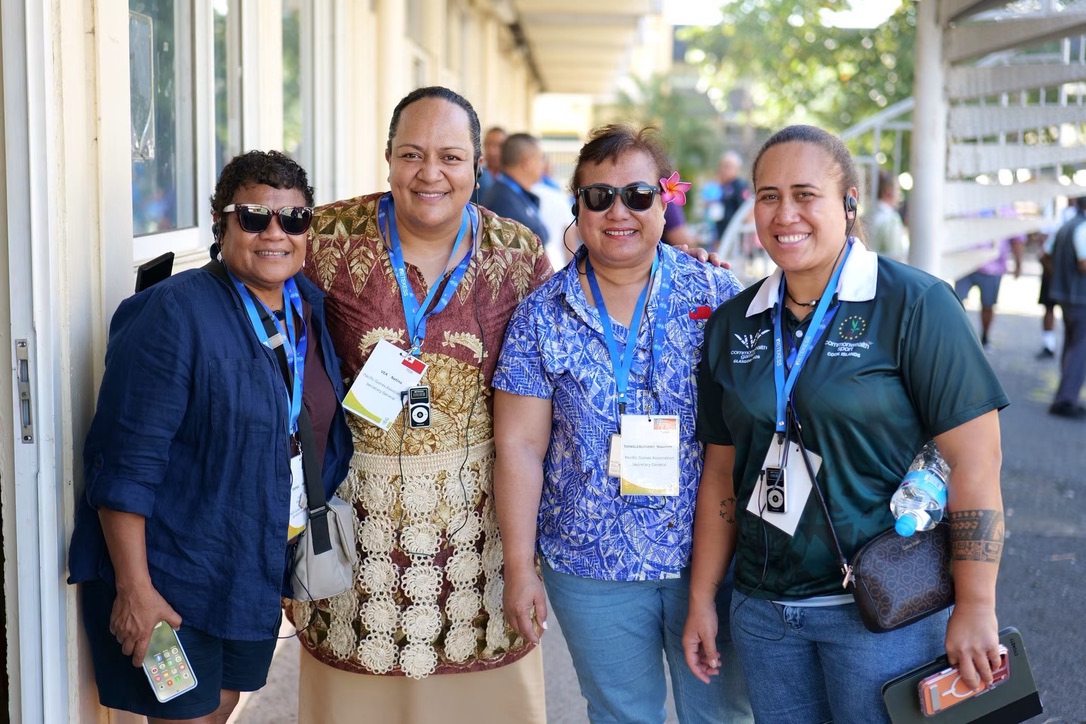
Looking ahead, President Temengil said the relationship between ONOC and the Pacific Games Council would become increasingly important as the region moves towards Tahiti 2027, Los Angeles 2028, the Cook Islands 2029 Pacific Mini Games, Tonga 2031 and Brisbane 2032.
Success, she said, would depend not on any one organisation acting alone, but on the ability of Oceania’s sporting organisations to work collectively in the service of athletes and communities.
“Every Games we have delivered, every athlete we have supported and every partnership we have built has reminded us of what is possible when Oceania works together as one Oceania team,” President Temengil said.
“Our Games and our sport continue to provide the best solutions and the greatest opportunities for our people. This is our business. This is our responsibility.”
President Temengil thanked the Pacific Games Council, the Comité Olympique de Tahiti Nui and the Tahiti 2027 Organising Committee for hosting the region’s sporting leaders in Papeete and reaffirmed ONOC’s commitment to continuing the partnership and shaping the future of sport in Oceania together.
The 2026 Pacific Games Council General Assembly was held on Friday, 7 August at the InterContinental Tahiti, bringing together Pacific Games Associations and regional sporting leaders.
The Assembly considered reports from the PGC Executive Board, Sport Committee, Technical and Human Resources Committee, Audit and Finance Committee and Athletes’ Representative, together with proposed amendments to the Pacific Games Council Charter.
A significant part of the programme was dedicated to progress reports from current and future Games hosts.
This included the final report on the Palau 2025 Pacific Mini Games and updates on preparations for the Cook Islands 2029 Pacific Mini Games and Tonga 2031 Pacific Games.
The Assembly also received a comprehensive progress update from the Tahiti 2027 Organising Committee on preparations for the XVIII Pacific Games, which will be staged in Tahiti next year.
The update provided Pacific Games Associations with an important overview of preparations as the region enters the final year leading into Tahiti 2027.
The programme also included reports from the Oceania National Olympic Committees (ONOC) and Oceania Sport, reinforcing the importance of regional coordination and partnership across the Pacific sporting movement.
###
About ONOC
Established in 1981, the Oceania National Olympic Committees (ONOC) is one of five Continental Associations. It looks after the interests of 17 member nations in the Oceania Region, including Australia and New Zealand as well as seven associate members.
###
For more information, please contact;
Sitiveni Tawakevou
Chief Communications Officer (Acting)
sitiveni@oceanianoc.org
###
Digital Channels
For up-to-the-minute information on ONOC and regular updates, please follow us on Facebook, Twitter, Instagram LinkedIn and YouTube.