Website Guide HERE

X
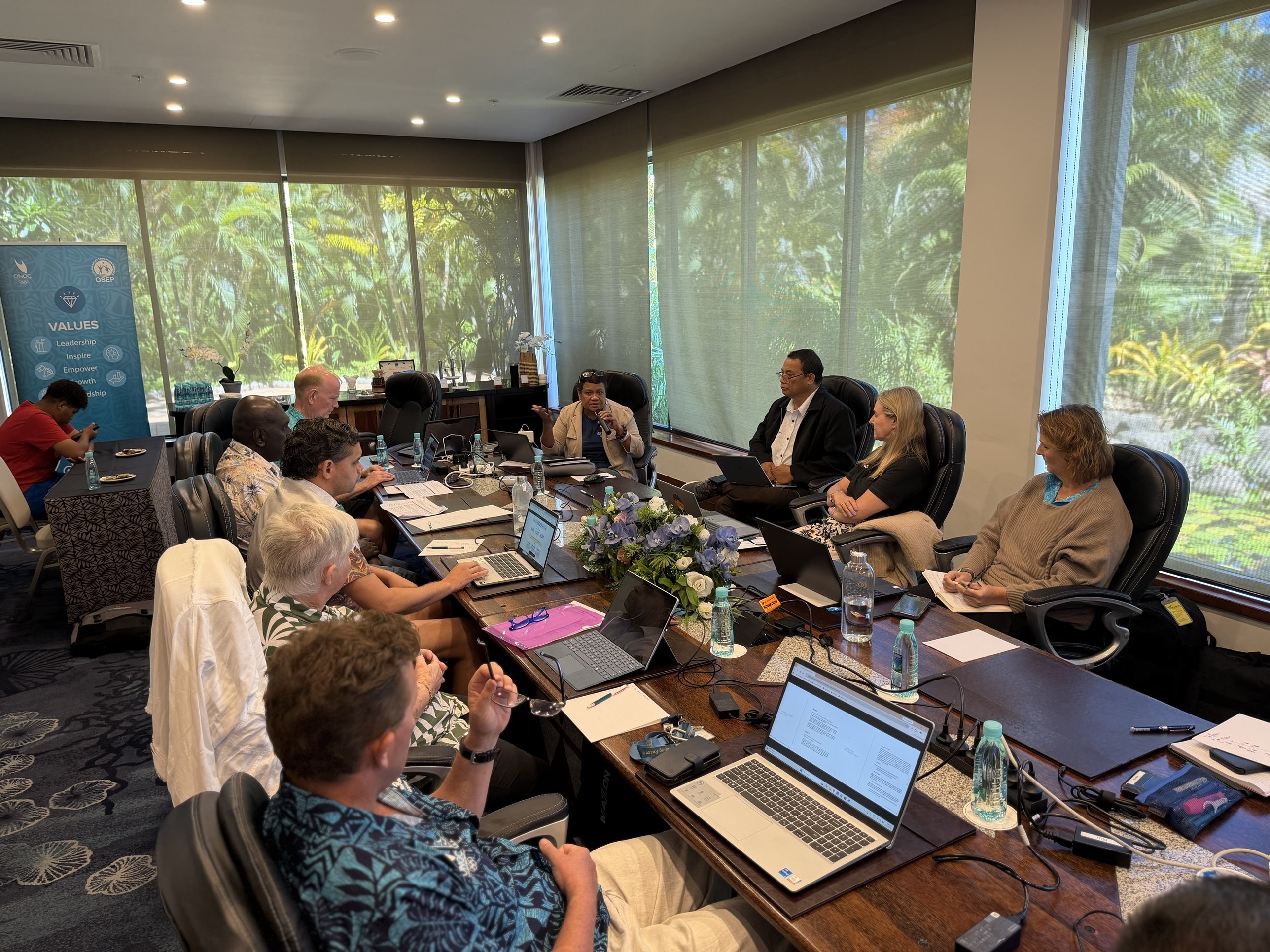
Opening the ONOC Education Commission Meeting and Workshop in Nadi, ONOC President Baklai Temengil called for a broader approach to education and continuous learning to strengthen sporting organisations and leadership across Oceania.
26 November 2026 | Nadi, Fiji | Oceania National Olympic Committees (ONOC) President and International Olympic Committee (IOC) Member Baklai Temengil has called for a broader approach to education and continuous learning to strengthen sporting organisations, enhance leadership and deliver meaningful outcomes for athletes and communities across Oceania.
Speaking at the official opening of the ONOC Education Commission Meeting and Workshop, being held from 25–26 November 2026 at the Sofitel Fiji Resort & Spa in Denarau, Nadi, President Temengil emphasised the importance of education in advancing the ONOC Strategic Plan 2025–2028, supporting the ONOC RESET Programme and preparing the region for the opportunities presented by the Brisbane 2032 Olympic and Paralympic Games.
The two-day meeting brings together Education Commission members, ONOC Secretariat representatives and regional partners to review priorities and shape the future direction of education and capacity development across Oceania.
President Temengil encouraged members to embrace a broader understanding of education, recognising that learning extends beyond formal qualifications, courses and workshops.
“Education in sport is not limited to formal courses, qualifications, workshops, or classroom learning. It is a living and continuous journey of learning through what we do every day in our communities.
“It is how we lead, govern, make decisions, work together and serve our sporting communities,” Temengil said.
Drawing on the Pacific context, she highlighted the importance of connecting education and sport to everyday life, promoting health, wellbeing, physical activity and accessibility, while recognising the diverse cultures, experiences and knowledge across ONOC’s 17 member National Olympic Committees (NOCs).
She encouraged members to learn from one another, share experiences and strengthen a regional culture of continuous learning.
President Temengil underscored the important role of the Education Commission in operationalising the ONOC Strategic Plan 2025–2028 and supporting the organisation’s transformation through ONOC RESET – Fit for Purpose, Fit for the Future.
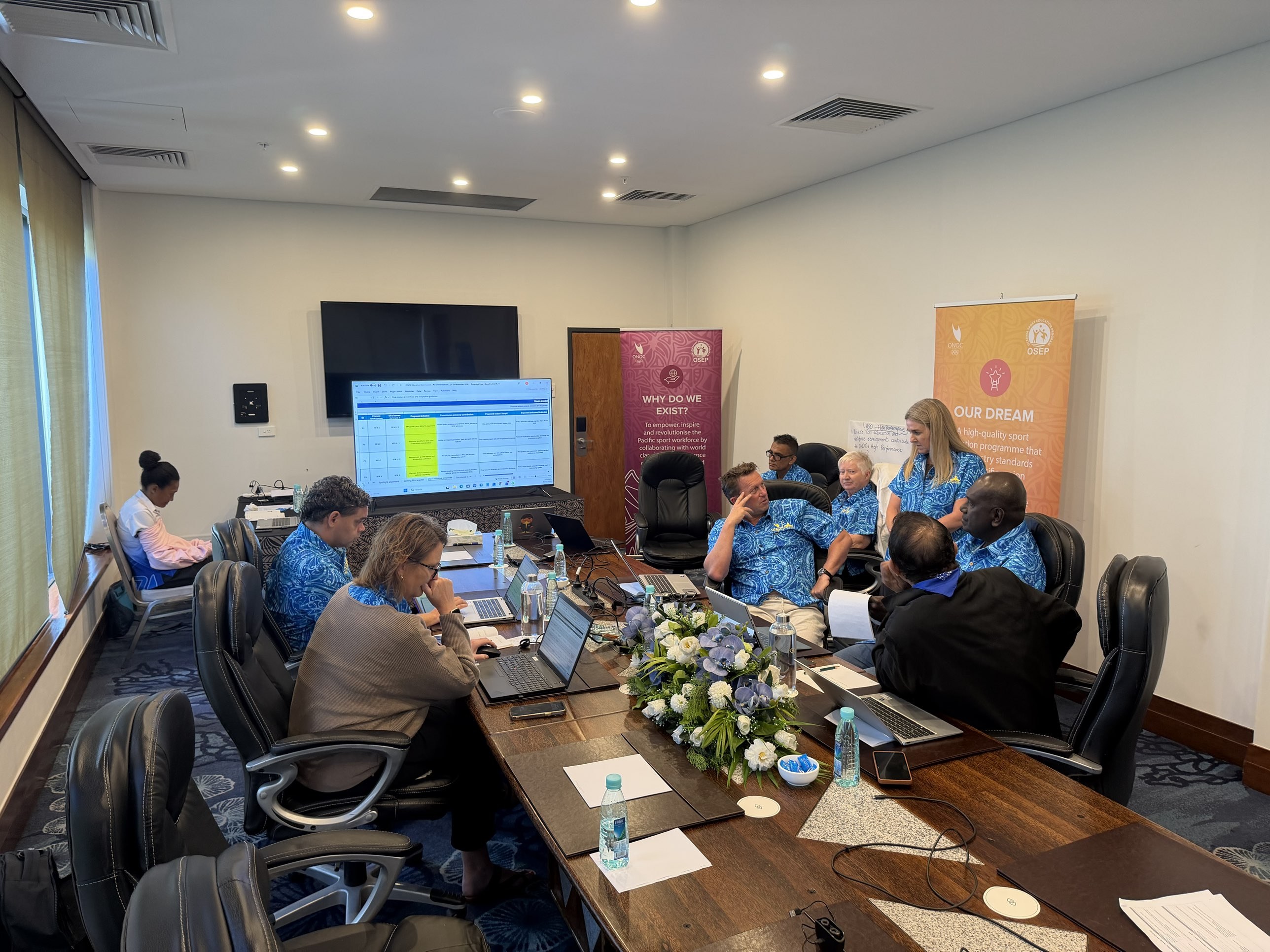
She highlighted the importance of connecting education with ONOC’s Theory of Change, ensuring that investment in learning and development translates into improved leadership, organisational effectiveness, good governance and sustainable outcomes.
“This is the mindset behind RESET. It is about reflection, learning, adding value and being prepared to change our approach when there is a better way forward,” Temengil said.
She reaffirmed that athletes must remain at the heart of ONOC’s work, alongside the wider sporting entourage and systems that support their development and success.
In setting the Commission’s direction for 2027 and beyond, President Temengil challenged members to focus on four key principles:
Looking ahead to Brisbane 2032, President Temengil highlighted education and capacity development as critical enablers of sporting success and sustainable development across Oceania.
“Our preparation must go beyond athletes and competition. We must also strengthen the people, leadership and systems that support sporting success.
“We need capable coaches, administrators, technical officials, sport scientists, educators and leaders who can contribute to sustainable development across our region,” she said.
She encouraged the Commission to consider the broader learning and development needs of NOCs, including qualifications, Olympic Values Education, physical education, quality assurance, volunteer development and regional partnerships.
President Temengil emphasised that the opportunities presented by Brisbane 2032 must extend beyond the Games themselves, leaving a lasting institutional legacy for NOCs, athletes, sporting communities and future generations.
“The future of sport in Oceania will depend not only on what we know, but on how we apply our knowledge, learn from one another and continue to improve.”
The meeting, chaired by ONOC Executive Board Member and Education Commission Chair Jim Tobin, provides an opportunity to identify strategic education priorities for 2027 and beyond, aligned with ONOC’s organisational transformation, strategic objectives and long-term ambitions for sport in Oceania.
###
About ONOC
Established in 1981, the Oceania National Olympic Committees (ONOC) is one of five Continental Associations. It looks after the interests of 17 member nations in the Oceania Region, including Australia and New Zealand as well as seven associate members.
###
For more information, please contact;
Inoke Bainimarama, Executive Director
inoke@oceanianoc.org
###
Digital Channels
For up-to-the-minute information on ONOC and regular updates, please follow us on Facebook, Twitter, Instagram LinkedIn and YouTube.