Website Guide HERE

X

Oceania NOCs leave Auckland with the foundation of an athlete-centred Road to LA28 Chefs de Mission and Games leaders close the two-day LA28 Pre-Games Preparation Forum in Auckland with practical plans, regional networks and a sharper focus on the athlete experience for Los Angeles 2028.
The Oceania National Olympic Committees (ONOC) closed the LA28 Pre-Games Preparation Forum at the Hilton Auckland today. Delegates left the room with the foundation of a draft LA28 NOC Games Delivery Plan and a shared commitment to placing athletes at the centre of every decision on the Road to Los Angeles 2028.
In his closing remarks, ONOC Secretary General Ricardo Blas described the Forum as a practical, outcomes-driven working session and reaffirmed that athlete welfare and the athlete experience must sit at the centre of every NOC decision on the Road to LA28.
"Everything we do must ensure our athletes feel supported, safe, and ready to perform in Los Angeles." Ricardo (Rick) Blas, Secretary General, Oceania National Olympic Committees (ONOC)
The two-day Forum was hosted by ONOC in collaboration with the International Olympic Committee (IOC), Olympic Solidarity, the LA28 Organising Committee, ANOC, the International Testing Agency (ITA) and the Oceania Regional Anti-Doping Organisation (ORADO). It brought together Chefs de Mission (CdMs), NOC Presidents, Secretaries General and Games preparation staff from across the region for working sessions, case studies and planning exercises.
Across two days, delegates moved from the operational reality of an LA28 Games into the practical work of building national plans, with sessions spanning NOC strategy, delegation preparation, athlete welfare, integrity and clean sport. Peer-to-peer case studies from across Oceania reinforced a shared regional approach: what one NOC learns, another can apply.
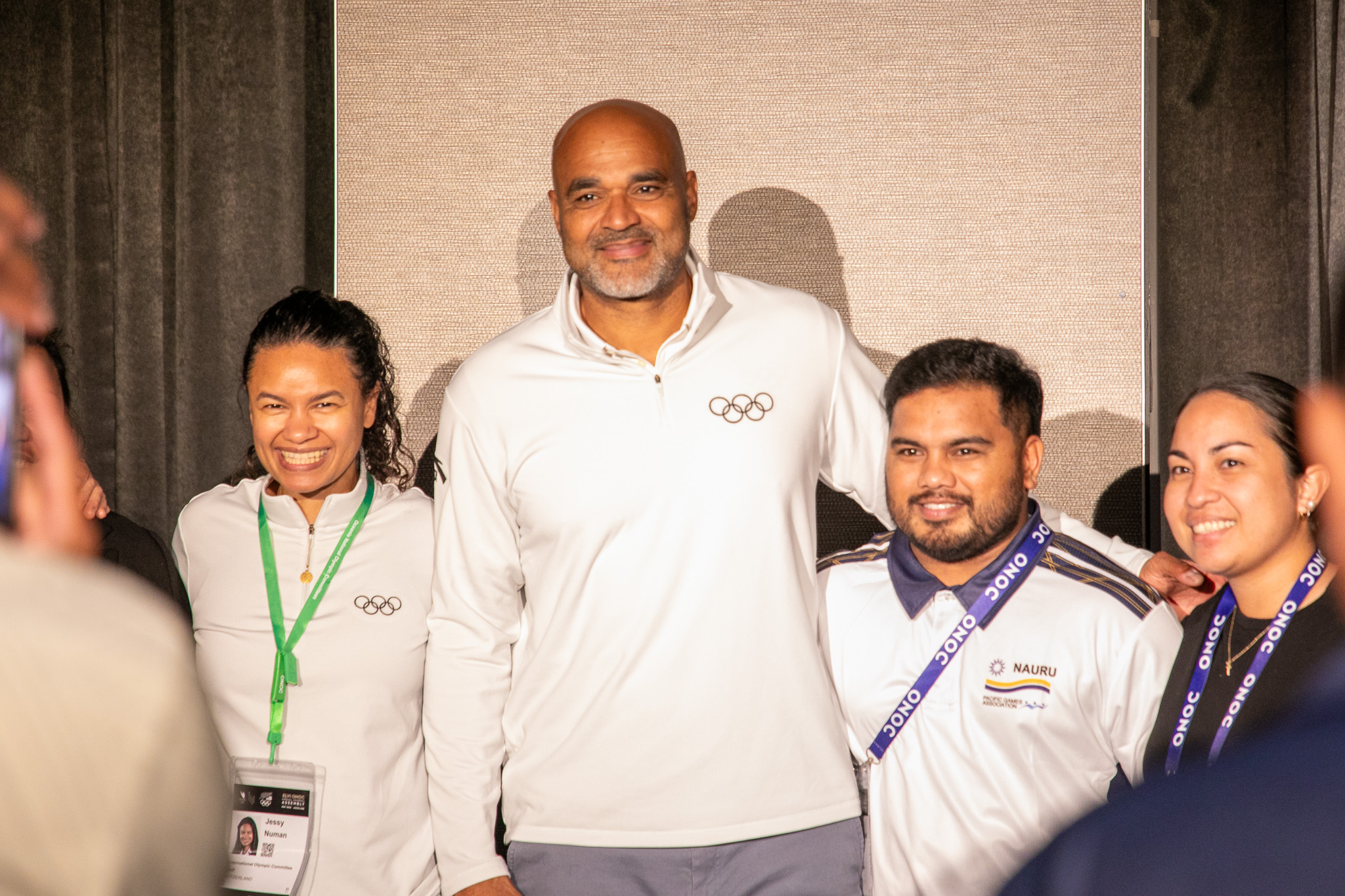
For first-time Chef de Mission Joseph Ioane of American Samoa, the Forum delivered tools he could put to work immediately. Ioane is also CdM for the 2027 Tahiti Pacific Games.
"Making this information practical is a big positive for me. I could take this information, I could use it to prepare for Tahiti, and then take some lessons from that to LA28." Joseph Ioane, Chef de Mission, Team American Samoa
Guam's CdM Sandra Low pointed to the importance of building a strong strategic awareness plan early and earning the trust of athletes.
"When you plan a trip, you need to know where you're going. I'm hoping to be one of those kinder and gentler CdMs… that they feel confident that I have their welfare in my mind." Sandra Low, Chef de Mission, Team Guam
In closing the Forum, Blas urged NOCs to hold the line on timelines, deadlines and disciplined planning, noting that delays in accreditation, logistics and entries flow directly through to the athlete experience. He encouraged delegations to keep collaborating, sharing lessons and supporting one another as "One Oceania Team," and aligned the Forum outcomes with the ONOC Strategic Plan 2025–2028, the ONOC RESET agenda and the work of the ONOC Games Commission. The standards and systems built now for LA28, he added, will also strengthen Oceania's pathway towards Brisbane 2032.
Each participating NOC leaves Auckland with the foundation of a draft LA28 NOC Games Strategy, to be refined and implemented at the national level. Strong Games performances begin long before the Opening Ceremony. They begin with planning, preparation, collaboration and leadership.
###
About ONOC
Established in 1981, the Oceania National Olympic Committees (ONOC) is one of five Continental Associations. It looks after the interests of 17 member nations in the Oceania Region, including Australia and New Zealand as well as seven associate members.
###
For more information, please contact;
Inoke Bainimarama, Executive Director
inoke@oceanianoc.org
###
Digital Channels
For up-to-the-minute information on ONOC and regular updates, please follow us on Facebook, Twitter, Instagram LinkedIn and YouTube.