Website Guide HERE

X
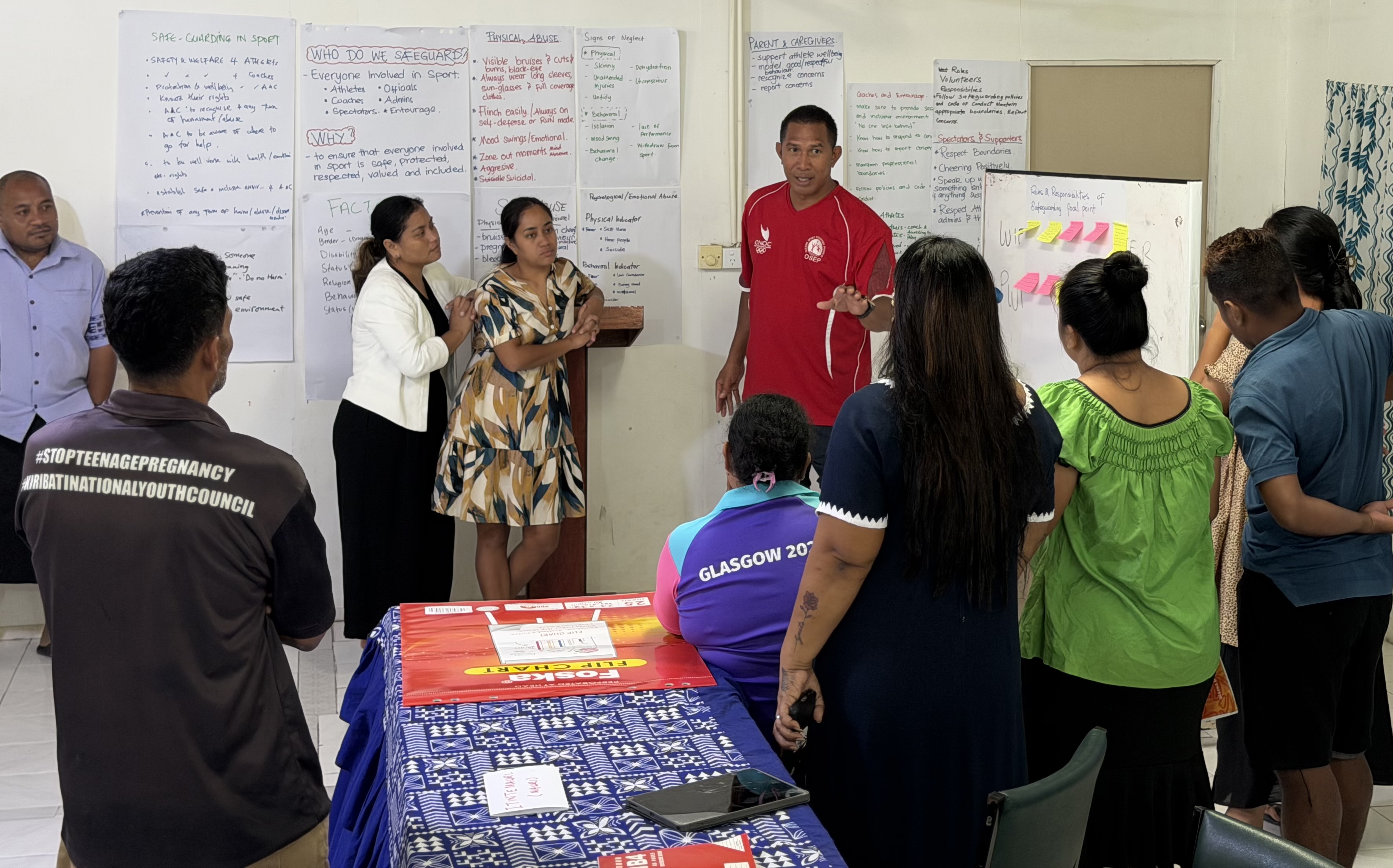
Thirteen participants have completed a three-day pilot of the OSEP Foundational Safeguarding Course in South Tarawa, delivered in partnership with the Kiribati National Olympic Committee. Their feedback will shape the course ahead of a regional rollout in early 2027.
25 September 2026 | South Tarawa, Kiribati | Thirteen participants have completed a three-day pilot of the Foundational Safeguarding Course run by the Oceania Sport Education Programme (OSEP), the flagship programme of the Oceania National Olympic Committees (ONOC). The course was held from 23 to 25 September at the YCL Boardroom in Antebuka, South Tarawa. OSEP delivered the community-level course in partnership with the Kiribati National Olympic Committee (KNOC).
KNOC Secretary General Rota Onorio said the committee had asked to host the pilot because it had identified a need for safeguarding training in Kiribati sport. He hopes the course will help national sport federations develop their own safeguarding policies and put them into practice.
Participants included representatives of Kiribati sport federations, KNOC, the Ministry of Women, Youth, Sports and Social Affairs, and the Ministry of Education. They explored how to recognise abuse, neglect and harmful behaviour; maintain appropriate boundaries; respond to concerns; and use reporting and referral pathways.
OSEP Regional Master Educator and Lead Facilitator Tihrani Uluinakauvadra said a participant's comment about feeling empowered to make a difference in the community had stayed with him. He said the group had examined the root causes of harm and abuse, including behaviours that have become normalised in sport and the wider community. Participants also discussed how they could support one another to raise awareness and strengthen safeguarding practice in their organisations.
For Ms. Ariteti Botibara, a curriculum development officer with Kiribati's Ministry of Education, the course has relevance beyond the workshop room. She hopes to use stories in curriculum materials to help parents and athletes better understand their rights and where to seek help. “I really want to become the voice of the voiceless in the community,” she said.
Ms. Kinaua Biribo, a judo coach, said the course prompted her to reflect on the way she speaks to young athletes, and to use a more constructive response when athletes do not listen, rather than reacting harshly.
Mr. Itintemauri Kararaua, a beach volleyball referee and coach who is also a schoolteacher, took a similar message into both sport and education, saying the course pushed him to think about how coaches treat athletes and the need to avoid favouritism. He would like more people in the community to have access to safeguarding training, along with regular opportunities to refresh what they have learned.
Mr. Manate Rumaroti, a Youth Officer with the Ministry of Women, Youth, Sports and Social Affairs, said the training was relevant both to the Ministry's work with young people and to how safeguarding concerns are handled within the organisation. He valued the depth of the course, saying staff had previously had limited training on the subject.
Ms. Angitonu David, a legal officer with the Development Bank of Kiribati and a KNOC Equity Commission member, said the course helped her recognise situations that raise safeguarding concerns. She said the learning would be valuable across sport and other organisations, helping people understand how to recognise concerns, report them and seek help.
OSEP Mentor and Pilot Validator Nynette Sass said the sensitive way the course was delivered stood out to her. She said the pilot also showed the importance of making safeguarding examples relatable and culturally relevant, while allowing facilitators in other countries to adapt case studies to their own settings.
At the close of the course, ONOC Acting Chief Sport Education Programme Officer Meli Cavu challenged each participant to identify one action they could take in their own role to make sport safer. He also asked them to raise one matter through the appropriate channel to help their organisation strengthen its safeguarding practices. Cavu said the value of this community-level course would be seen in the conversations participants begin, the behaviours they model and the improvements they encourage after returning home.
The course was developed and validated in 2025 with contributions from the Fiji Paralympic Committee; ONOC's regional partners Team Up and Oceania Rugby; practitioners from Oceania Football and National Rugby League Ltd; and several regional graduates of the IOC Safeguarding Officer in Sport Certificate distance learning programme.
Participants' feedback and the facilitation team's observations will help OSEP strengthen the course content, activities, assessment tools and delivery approach before a wider regional rollout planned for the first quarter of 2027. The pilot supports Priority Area 4: Safe and Fair Sport in the ONOC Strategic Plan 2025–2028.
Media contact: Rota Onorio, Secretary General, Kiribati National Olympic Committee — rkonorio@gmail.com
###
About ONOC
Established in 1981, the Oceania National Olympic Committees (ONOC) is one of five Continental Associations. It looks after the interests of 17 member nations in the Oceania Region, including Australia and New Zealand as well as seven associate members.
###
For more information, please contact;
Sitiveni Tawakevou
Chief Communications Officer (Acting)
sitiveni@oceanianoc.org
###
Digital Channels
For up-to-the-minute information on ONOC and regular updates, please follow us on Facebook, Twitter, Instagram LinkedIn and YouTube.