Website Guide HERE

X
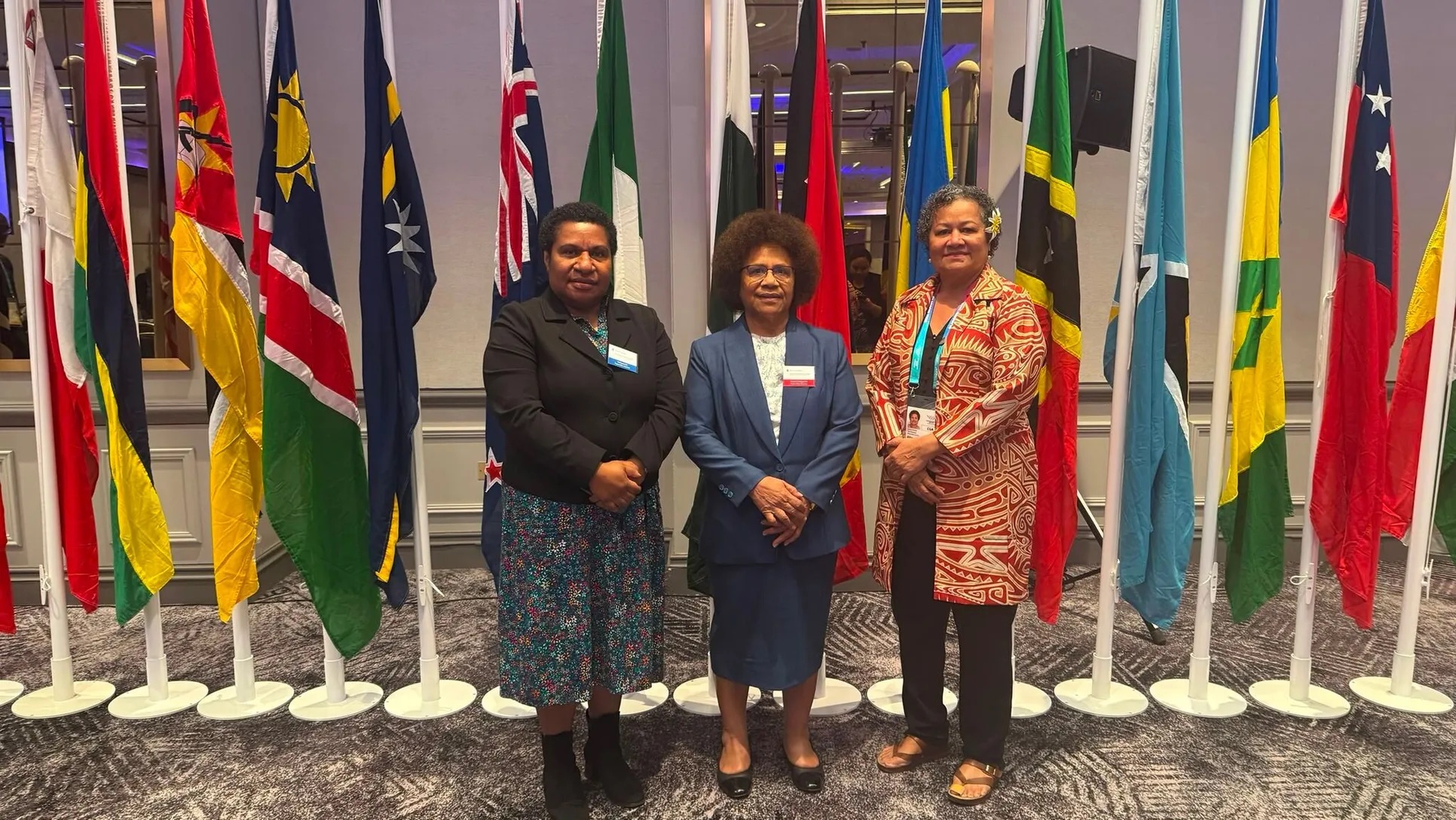
ONOC Vice President Emma Waiwai carried an Oceania and Pacific voice to the 12th Commonwealth Sports Ministers Meeting in Glasgow on 22 July 2026, calling for sport to be used more deliberately as a platform for gender equality, safeguarding, leadership and positive social change.
GLASGOW, Scotland — Oceania National Olympic Committees (ONOC) Vice President Emma Waiwai has carried a strong Oceania and Pacific voice to the 12th Commonwealth Sports Ministers Meeting (CSMM) in Glasgow, Scotland on 22 July 2026, calling for sport to be used more deliberately as a platform for gender equality, safeguarding, leadership and positive social change.
Representing Oceania at the high-level Commonwealth gathering, Waiwai drew on her experience as President of the Papua New Guinea Commonwealth Games Association and as a long-serving Pacific sport leader to demonstrate how challenges confronting women and girls can be addressed through sport, community engagement, strong governance and strategic partnerships.
Her intervention also reflected priorities within the ONOC Strategic Plan 2025–2028, which places athletes at the centre of a stronger and more connected Oceania sport ecosystem and identifies Supporting Sporting Excellence, Strengthening NOC Services, Cultivating Strategic Partnerships and Leading by Example as ONOC's four core functions.
Importantly, the address comes as ONOC and its 17 National Olympic Committees strengthen their collective pathway towards the Brisbane 2032 Olympic and Paralympic Games, positioning the Games not simply as a sporting destination, but as an opportunity to build stronger systems, leadership, partnerships and lasting social legacies across Oceania.
Waiwai opened her address with a fundamental question for governments and sporting organisations across the Commonwealth: how can we ensure sport genuinely belongs to women and girls — not simply in name, but in practice?
Drawing on Papua New Guinea's experience, she highlighted the serious gender inequality challenges confronting communities and argued that sport cannot operate in isolation from these wider social realities. Instead, community sport can become a trusted platform for prevention, inclusion, leadership and empowerment.
Waiwai highlighted programmes including Just Play, delivered under the Team Up banner, where structured sporting activities provide safe spaces for girls while incorporating female and mixed-gender coaching, clear codes of conduct and opportunities for children with disabilities.
The examples reinforced a wider message for Oceania: the value of sport must extend beyond competition and medals to the contribution it can make to healthier, safer and more inclusive Pacific communities.
Central to Waiwai's intervention was the responsibility of sporting organisations to provide safe environments.
She outlined the PNG Commonwealth Games Association's approach to safeguarding, including clear procedures for responding to concerns and embedding messages around healthy relationships, consent and reporting mechanisms into programme delivery.
"Safeguarding cannot be optional," Waiwai stressed, arguing that it must become part of coach education, clubs, competitions and sporting organisations.
This focus aligns strongly with ONOC's commitment under its 2025–2028 Strategic Plan to strengthen the capability of its member NOCs and to lead by example in building effective, inclusive and well-governed sporting organisations across the region.
Waiwai also challenged sporting organisations to look beyond participation numbers and ensure women have meaningful opportunities to lead.
The PNG Commonwealth Games Association has maintained a Gender Equity Committee for almost three decades, while its Gender Equity Policy embeds equality into recruitment, team selection, professional development and leadership pathways.
Waiwai noted that women have won more than half of Team PNG's gold medals across the past three quadrennials.
"When women are given equal opportunity, they excel — and they inspire the next generation," she said.
For ONOC, developing this next generation of women leaders is also an important part of preparing Oceania for Brisbane 2032. The region's Home Games pathway extends beyond athlete performance to strengthening the wider ecosystem around athletes, including coaches, technical officials, administrators, leaders and sporting organisations.
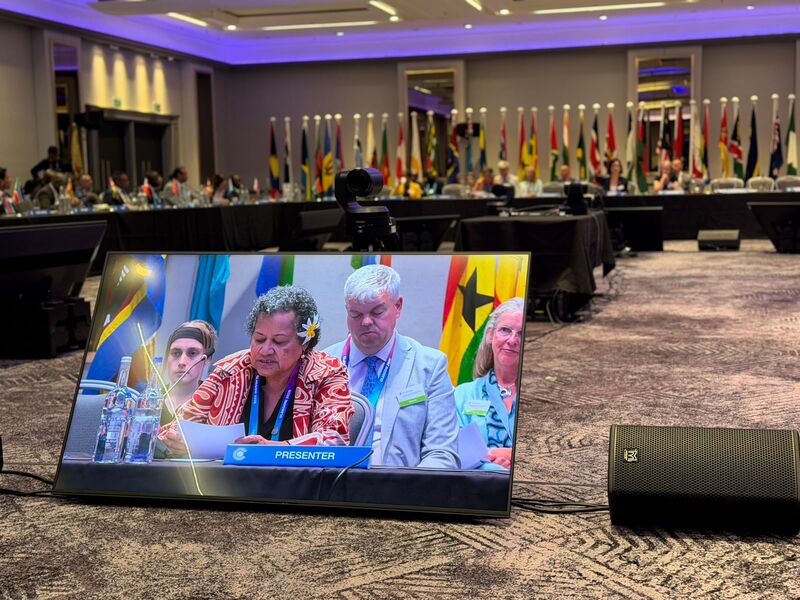
Speaking specifically in her capacity as ONOC Vice President, Waiwai highlighted the value of regional collaboration and partnership.
She pointed to the Oceania Impact Network (OIN), showcased by ONOC at the recent IWG Global Summit on Women and Sport, as an example of a Pacific-led partnership bringing together sport, governments, development partners and civil society to create safer and more inclusive environments for women and girls.
Waiwai told the meeting that lasting change comes through "trust, shared leadership and genuine partnership."
That message directly supports ONOC's strategic priority of Cultivating Strategic Partnerships and the organisation's increasing emphasis on using regional and international engagement to mobilise the relationships, expertise and investment required by Pacific sport.
It is particularly significant on the pathway to Brisbane 2032. ONOC has identified the Home Games as a once-in-a-generation opportunity for Pacific nations to use sport as a lever for broader transformation, strengthening athlete pathways and human capability while bringing governments, NOCs, sporting federations, development partners and the private sector around shared national and regional objectives.
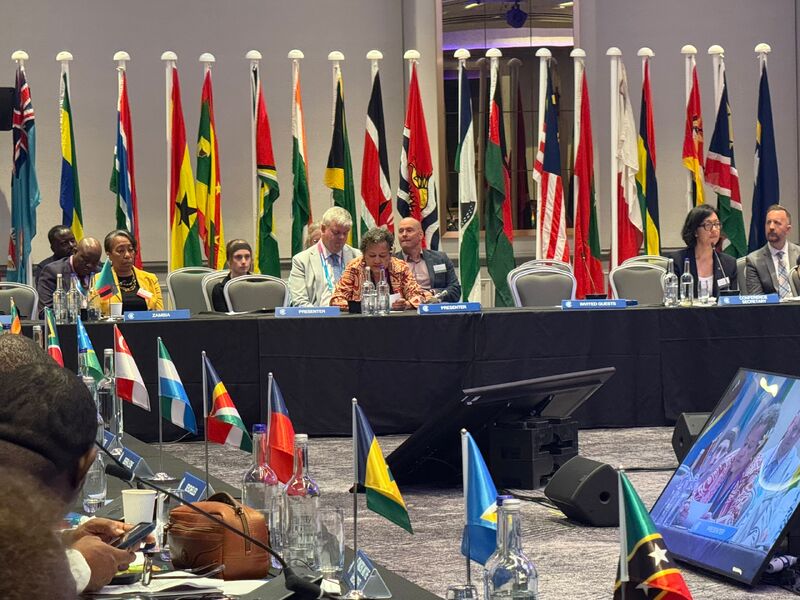
Waiwai concluded by presenting Commonwealth Sports Ministers with four practical "no-regrets actions": embed safeguarding and gender equality into national sport policy and funding; invest in community sport as a frontline platform for prevention and inclusion; elevate women and girls into leadership across sport; and strengthen partnerships rather than duplicate effort.
The recommendations provide a practical bridge between the social impact of sport today and the kind of sporting ecosystem Oceania wants to build towards 2032.
For the Pacific, Brisbane 2032 is therefore about more than preparing athletes for a Home Games. It is an opportunity to build stronger NOCs, develop more Pacific leaders, create safer sporting environments, deepen partnerships and ensure women and girls are equally positioned to participate, perform and lead.
Waiwai closed with a message that resonated beyond Papua New Guinea and across the wider Oceania region:
"Together, let us ensure sport remains a catalyst for equality, leadership, safety and hope for every woman and girl across the Commonwealth."
Her presence in Glasgow demonstrated ONOC's commitment to ensuring Oceania has a voice in the international conversations shaping the future of sport, while bringing those conversations back to the region's own priorities.
As ONOC advances its 2025–2028 Strategic Plan and the collective pathway towards Brisbane 2032, that voice will be increasingly important: advocating for the Pacific, building partnerships for its NOCs and athletes, and ensuring that the legacy of a Home Games is measured not only by sporting performance, but by the stronger, safer and more inclusive Oceania sport system it leaves behind.
###
About ONOC
Established in 1981, the Oceania National Olympic Committees (ONOC) is one of five Continental Associations. It looks after the interests of 17 member nations in the Oceania Region, including Australia and New Zealand as well as seven associate members.
###
For more information, please contact;
Sitiveni Tawakevou
Chief Communications Officer (Acting)
sitiveni@oceanianoc.org
###
Digital Channels
For up-to-the-minute information on ONOC and regular updates, please follow us on Facebook, Twitter, Instagram LinkedIn and YouTube.